Key Takeaways
- Know the critical warning signs: Severe breathing trouble, sudden collapse, and active seizures are life-threatening emergencies that require immediate veterinary intervention.
- Understand Urgent vs. Emergency Care: Emergency hospitals handle severe traumas and rapid health declines, while urgent care clinics treat minor wounds and mild illnesses. Choosing the right facility saves critical time.
- Never “wait and see”: Pets naturally hide their pain. Delaying treatment allows manageable issues to quickly escalate into more dangerous, painful, and expensive medical crises.
- Rely on 24/7 local support: Allied Veterinary Emergency and Referral operates continuously across Minnesota and Western Wisconsin, providing immediate, independent medical care the second your pet needs help.
Seeing your pet in distress is one of the most upsetting experiences a pet owner can face. In an instant, you’re left asking yourself: Is this an emergency, or can it wait until morning? Because pets can’t explain what they’re feeling, it’s often hard to tell the difference between something minor and a serious medical problem.
In those moments, quick decisions matter. Acting promptly can significantly affect your pet’s outcome, and knowing where to turn for help brings much-needed reassurance. Allied Veterinary Emergency & Referral is here to provide clear answers and immediate, compassionate care when your pet needs it most.
The Challenge of Pet Emergencies: Knowing When to Act
It’s not always easy to tell when something is truly wrong. Animals have a natural instinct to hide pain or illness, which means serious problems can go unnoticed until they’re advanced. A pet that just seems tired, withdrawn, or “not quite right” could be dealing with something far more serious beneath the surface. That uncertainty often leaves owners torn between worrying they’re overreacting and fearing they might wait too long.
This guide is meant to help you make clearer decisions in those moments. By knowing the warning signs of a true emergency, you can respond quickly and with confidence, so your pet receives prompt medical care when it matters most.
What Qualifies as a Veterinary Emergency?
A veterinary emergency is any situation that is immediately life-threatening or has the potential to become so without swift intervention. These conditions often involve the rapid decline of a pet’s health due to severe injury, acute illness, or trauma that requires emergency veterinary services. Think of it as any condition where a delay in treatment could lead to permanent harm or be fatal. This includes severe bleeding, difficulty breathing, seizures, collapse, or the ingestion of a toxic substance. It’s crucial to distinguish these critical events from less severe issues that, while still requiring prompt attention, are not immediately life-threatening.
Critical Signs Your Pet Needs Immediate Emergency Care
Recognizing the signs of a true medical emergency is one of the most important things a pet owner can learn. If your pet shows any of the symptoms below, it’s time to seek immediate veterinary care. Acting quickly can prevent complications and, in some cases, save your pet’s life.
Recognizing Life-Threatening Breathing Difficulties
Trouble breathing is always an emergency. Normal resting respiratory rate for dogs and cats is typically between 15-30 breaths per minute; a rate that is consistently over 40-60 is a cause for concern. Pay close attention if you notice:
- Labored or Exaggerated Breathing: Watch for noticeably deep or exaggerated chest motions. Your pet might be using their stomach muscles to help them breathe.
- Noisy Breathing: Any wheezing, raspy sounds, or gurgling is abnormal and requires immediate evaluation.
- Pale or Blue Gums: Bluish gums or tongue (cyanosis) indicate a severe lack of oxygen and are a critical emergency.
- Open-Mouth Breathing (Especially in Cats): While dogs pant, cats should never breathe with their mouths open. If you see a cat panting, it is a medical emergency.
- Unusual Posture: A pet struggling to breathe may stand with its neck extended or its elbows splayed out, trying to open its airway.
Neurological Symptoms: Seizures, Collapse, and Disorientation
Neurological symptoms are among the most alarming for pet owners and demand immediate medical intervention. Look for these critical signs:
- Seizures: This can manifest as full-body convulsions, muscle twitching, paddling of the legs, loss of consciousness, or even just a dazed, staring spell. A seizure lasting more than three to five minutes, or multiple seizures occurring in a short period (cluster seizures), is a life-threatening situation.
- Sudden Collapse or Inability to Stand: If your pet suddenly collapses, is unable to get up, or shows sudden paralysis or weakness in its limbs, it requires an emergency evaluation. This could signal a severe neurological, cardiovascular, or internal issue.
- Extreme Disorientation: While mild confusion can occur, severe disorientation, head tilting, an inability to balance, walking in circles, or a sudden change in consciousness is a serious concern.
Other clear emergencies include uncontrolled bleeding, persistent or severe vomiting and diarrhea (especially with blood), a hard or bloated abdomen, signs of extreme pain (whining, shaking, hiding), or suspected poisoning. If you believe your pet has ingested something toxic, call your vet or the ASPCA Animal Poison Control Center immediately for guidance.
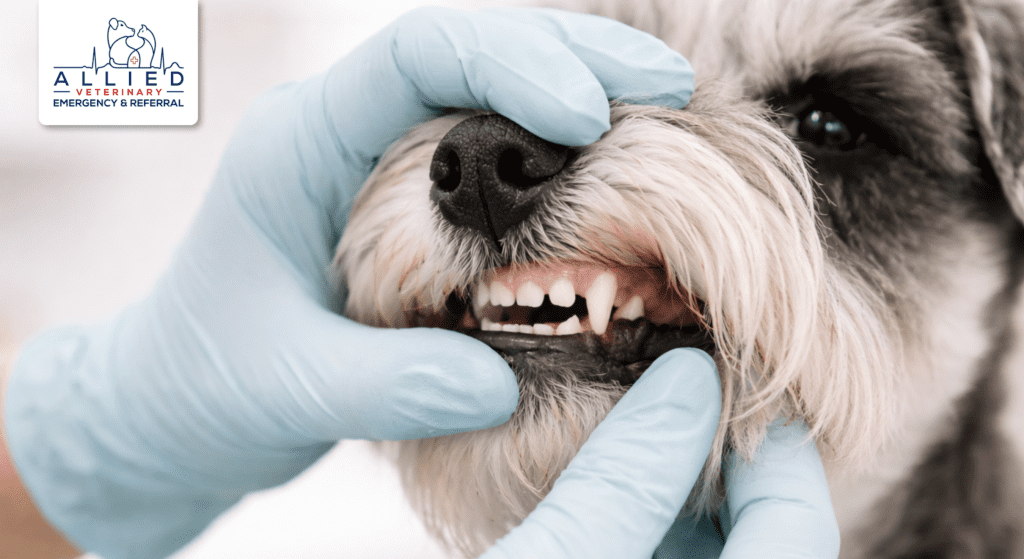
Landscape orientation, close-up macro-style image of gloved hands gently lifting the lip of a Miniature Schnauzer to check gum color. Neutral, softly lit exam environment with background blurred into warm white tones. Tight framing focused on hands and muzzle only, no visible faces, bright even lighting, professional clinical detail shot.
Urgent Care vs. Emergency Vet: Understanding the Distinction
Knowing where to go is just as important as knowing when to go. While the terms “urgent care” and “emergency care” are sometimes used interchangeably, they refer to different levels of treatment.
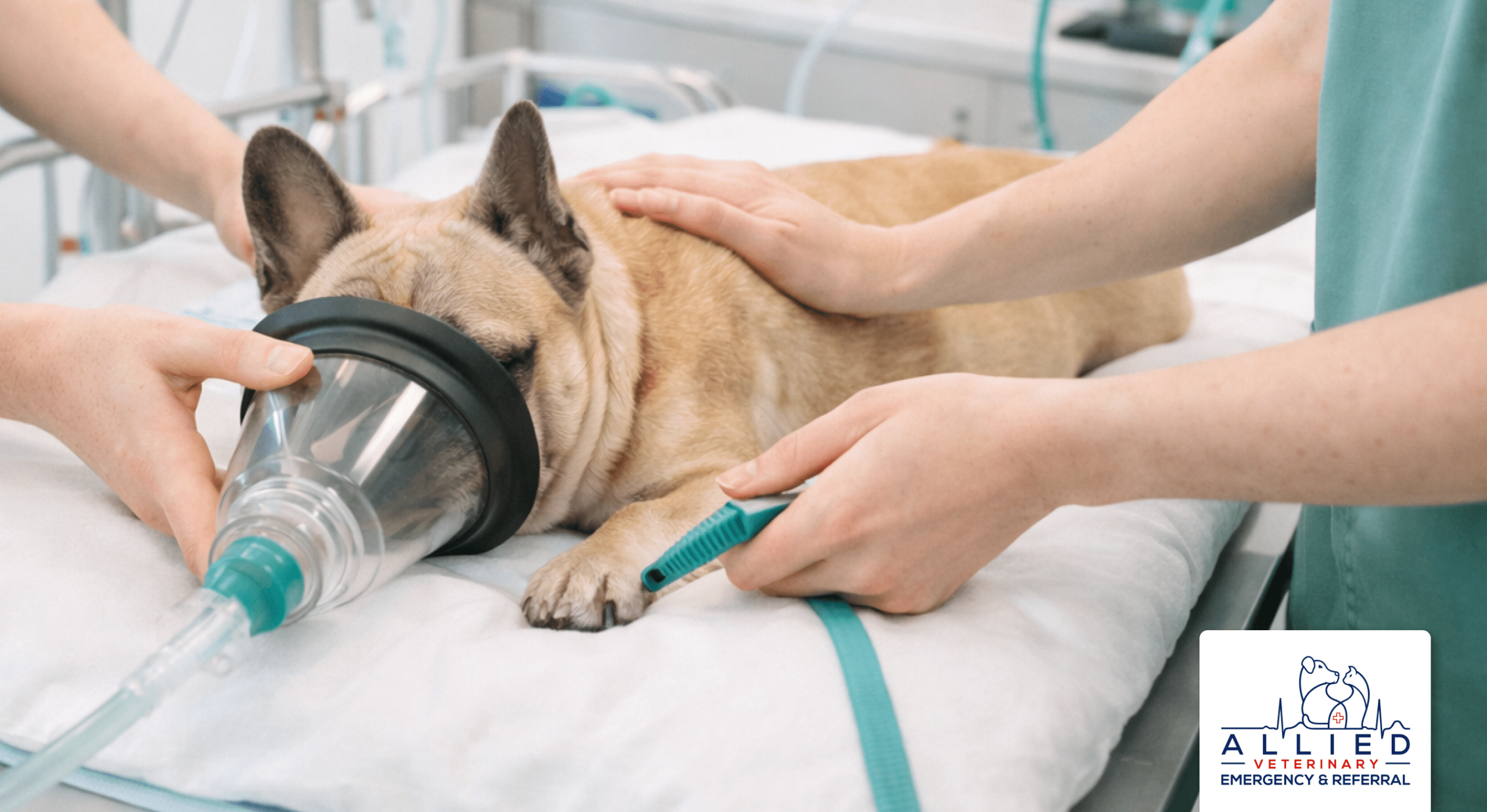
Emergency care is reserved for life-threatening conditions that require immediate and often intensive medical intervention. These cases may involve major trauma, difficulty breathing, uncontrolled bleeding, seizures, sudden collapse, or other severe symptoms. Emergency hospitals are staffed around the clock and equipped with advanced diagnostics, surgical suites, and critical care capabilities to manage complex and rapidly changing situations.
Urgent care, on the other hand, is designed for problems that need prompt attention but are not immediately life-threatening. This may include minor wounds, mild gastrointestinal upset, ear infections, limping without severe pain, or skin issues. Urgent care clinics help bridge the gap between your primary veterinarian and a full-service emergency hospital.
Choosing the appropriate level of care helps ensure your pet is treated efficiently and keeps emergency resources available for the most critical patients. If you’re unsure, it’s always safest to seek care at an emergency facility, where a team can quickly assess your pet and determine the next steps.
Why Timely Action Matters: Risks of Delaying Care
In a true veterinary emergency, every minute counts. The “wait and see” approach can have devastating consequences. Delaying necessary treatment can lead to a cascade of negative outcomes, including:
- Worsening of the Condition: A manageable problem can quickly escalate into a more complex and dangerous one. For example, a simple bloat can progress to a fatal stomach twist (GDV).
- Increased Pain and Suffering: Prompt medical care is essential for managing pain and alleviating distress for your pet.
- More Complex and Costly Treatment: Conditions that are caught early are often simpler and less expensive to treat. Delayed care can lead to the need for more intensive, prolonged, and costly interventions.
- Reduced Chance of a Full Recovery: The sooner a critical condition is stabilized and treated, the better the prognosis. Delay can lead to irreversible organ damage or other long-term complications.
According to the American Veterinary Medical Association, being prepared and acting quickly are key to a better outcome in any pet emergency. Do not hesitate to seek emergency services if you believe your pet is in critical distress.
Allied Veterinary: Your 24/7 Emergency Resource in Minnesota & Western Wisconsin
When your pet is facing a medical emergency, you need a team that is ready and experienced. As an independent, privately owned hospital offering emergency and specialty veterinary care, Allied Veterinary Emergency & Referral is built around a simple principle. Care should be personal, thoughtful, and centered on the needs of pets and the people who love them. Our approach to Invested Veterinary Care means every decision is guided by what is best for the patient, with clear communication and genuine compassion at every step. Our emergency veterinarians and technicians are available 24 hours a day, 365 days a year. Our hospitals, including our Brooklyn Park location, are fully equipped to manage serious injuries, sudden illnesses, and complex critical cases.
We understand how overwhelming these situations can be, and you do not have to handle them alone. If your pet is showing signs of a medical emergency, contact Allied Veterinary Emergency & Referral right away or come directly to our Brooklyn Park hospital for immediate care. Our team is here around the clock to provide the urgent attention your pet needs when every minute counts.
Frequently Asked Questions
What are the absolute critical signs that mean my pet needs an emergency vet immediately?
Absolute critical signs include severe difficulty breathing (e.g., gasping, blue gums), uncontrolled bleeding, active seizures lasting more than a few minutes or occurring in clusters, sudden collapse or loss of consciousness, and suspected poisoning. These situations require immediate veterinary attention.
How can I tell if my pet’s symptoms are urgent but not necessarily an emergency?
Urgent but non-life-threatening symptoms might include mild lameness, persistent but non-severe vomiting or diarrhea (lasting less than 24 hours), minor cuts or wounds that aren’t bleeding heavily, ear infections, or mild allergic reactions without breathing difficulties. These still require prompt veterinary attention, often at an urgent care clinic.
What should I do if I suspect my pet has ingested something poisonous?
If you suspect poisoning, contact Allied Veterinary Emergency and Referral immediately. Do not try to induce vomiting unless specifically instructed by a veterinarian, as some substances can cause further harm if vomited. Gather any information about the substance ingested to share with the vet.
Can I call Allied Veterinary for advice before bringing my pet in?
Yes, Allied Veterinary encourages pet owners to call ahead if they are unsure about the severity of their pet’s condition. Our emergency team can provide guidance over the phone and prepare for your pet’s arrival, ensuring efficient care.
What makes Allied Veterinary Emergency and Referral a trusted choice for emergency pet care in Minnesota and Western Wisconsin?
Allied Veterinary is a locally owned, independent emergency and specialty clinic built on compassion, connection, and excellence. We offer 24/7 immediate veterinary care with a human-centered approach, accessible pricing, and a highly skilled, invested team dedicated to the best outcomes for patients and their families.