Key Takeaways
- Unmatched Clarity: 3D high-definition veterinary CT offers 360-degree, highly detailed views of bone, soft tissue, and blood vessels that standard X-rays miss.
- Targeted Care: Advanced pet diagnostics are essential for accurately identifying complex tumors, severe orthopedic issues, and hidden internal trauma.
- Safety First: Reputable veterinary imaging centers employ board-certified specialists and rigorous anesthesia protocols to ensure your pet’s complete safety during the scan.
- Rapid Results: 3D animal imaging allows for quick, definitive diagnoses, accelerating the timeline for critical surgical or medical treatments.
When a pet faces a complex medical issue, the ability to see internal structures clearly can be the difference between a successful recovery and a prolonged illness. Traditional diagnostic tools often provide a limited view of what is happening inside a pet’s body. At Allied Veterinary Emergency and Referral, we use 3D high-definition imaging to remove the guesswork from difficult cases. This technology allows our specialists to view internal organs, bones, and soft tissues with incredible clarity. This ensures that every treatment plan is based on accurate data.
By providing access to advanced imaging, we help pet owners and primary care veterinarians navigate complicated health concerns. Our focus is on medical precision and integrity. Using 3D high-definition scans ensures that we can identify hidden problems early and plan interventions with a high degree of accuracy. This guide explains how this specialized technology works and why it is essential for managing serious veterinary conditions.
The Limitations of Traditional X-Rays and Internal Medical Risks
Traditional X-rays are useful for identifying broken bones or large foreign objects, but they have significant limitations when it comes to soft tissue or complex structures. An X-ray produces a flat, two-dimensional image that often causes overlapping organs to hide potential problems. This lack of depth creates a risk of missing small tumors, internal bleeding, or subtle structural abnormalities.
Relying only on basic imaging during a medical event can lead to a delayed diagnosis. If a condition is not identified quickly, the medical risks to the pet increase significantly. Allied Veterinary Emergency and Referral uses 3D imaging to overcome these barriers. This provides a comprehensive view that traditional X-rays simply cannot match.
High Definition 3D Accuracy
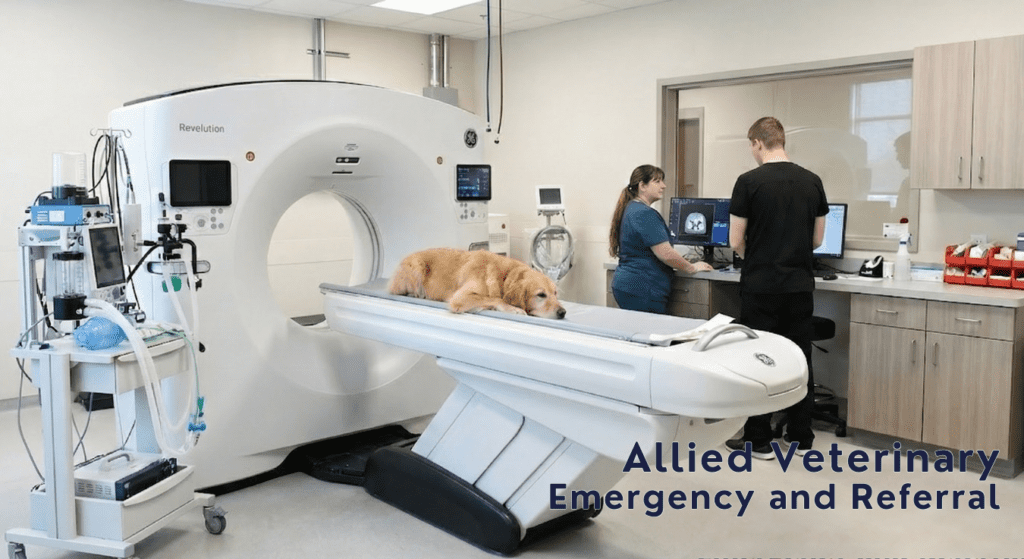
Our 3D high-definition CT scanner captures thousands of images to create a detailed three-dimensional model of your pet’s internal anatomy. This level of accuracy allows our doctors to rotate the image and view structures from every possible angle. We can see through dense tissue and bone to locate the exact source of a problem. This is essential for diagnosing issues in the chest, abdomen, and skull.
Rapid Imaging Speed
In an emergency or specialty setting, the speed of diagnostics is a major factor in patient safety. Our imaging technology is designed to be incredibly fast. This reduces the amount of time a pet needs to be sedated or kept still. Rapid imaging ensures that we get the answers we need without adding unnecessary stress to a pet that may already be in a vulnerable state.
Board-Certified Interpretation
The data gathered from a 3D scan is only as good as the professional interpreting it. Every scan performed at Allied Veterinary Emergency and Referral is reviewed by a board-certified specialist. These experts have the training to identify subtle details in the imaging that might be overlooked in a general practice. This expert interpretation ensures that the final diagnosis is reliable and clinically sound.
Why Might Your Pet Need a High-Definition CT Scan?
Your pet might need a 3D high-definition CT scan if they are experiencing complex medical issues like deep-seated tumors, severe bone injuries, or neurological symptoms. This type of veterinary imaging provides the clarity needed when standard diagnostic tools do not give a clear answer. The doctors at Allied Veterinary Emergency and Referral use 3D imaging as a critical step for planning surgical or cancer treatments.
The transition to advanced diagnostics usually happens when a general veterinarian finds an abnormality but cannot see its exact size or origin. A 3D CT scan removes these blind spots. For example, if a pet shows signs of nasal cavity disease, traditional X-rays are often ineffective because the bone structures of the skull are so complex. A 3D high-definition CT scan can clearly reveal polyps, fungal infections, or tumors that would otherwise stay hidden.
Diagnostic Precision and When Your Pet Needs a 3D CT Scan
A 3D CT scan is not required for every vet visit, but it is a vital tool for specific situations. When a primary care veterinarian identifies a concern that requires more detail, they will often refer the patient to a specialty hospital for advanced imaging. Knowing when to use this technology can significantly improve the outcome for pets with serious health challenges.
Oncology and Tumor Staging
For pets diagnosed with cancer, 3D imaging is the gold standard for tumor staging. We use our veterinary diagnostic imaging to determine the exact size and location of a mass. More importantly, the scan helps us see if the cancer has spread to nearby lymph nodes or other organs. This information is required for creating an effective treatment or radiation plan.
Complex Surgical Planning
Before a surgeon begins a procedure, they need to know exactly what they will encounter. 3D high-definition imaging provides a roadmap for advanced surgical planning. Whether we are repairing a complicated fracture or removing a mass near a major blood vessel, having a 3D model allows the surgeon to plan their approach with precision. This often leads to shorter surgery times and faster recoveries.
Trauma and Internal Damage
In cases of severe trauma, such as a fall or a vehicle accident, internal damage is not always obvious during a physical exam. A 3D scan allows us to quickly assess the entire body for internal bleeding, organ damage, or hidden fractures. This rapid and thorough assessment is a key part of our emergency veterinary services and ensures that life-threatening issues are addressed immediately.
The Referral Process and What to Expect During the Scan Day
Most 3D imaging cases begin with a referral from your primary care veterinarian. Once the referral is made, our team coordinates the logistics of the scan day to make the process as smooth as possible. We focus on clear communication so you understand every step of the diagnostic journey.
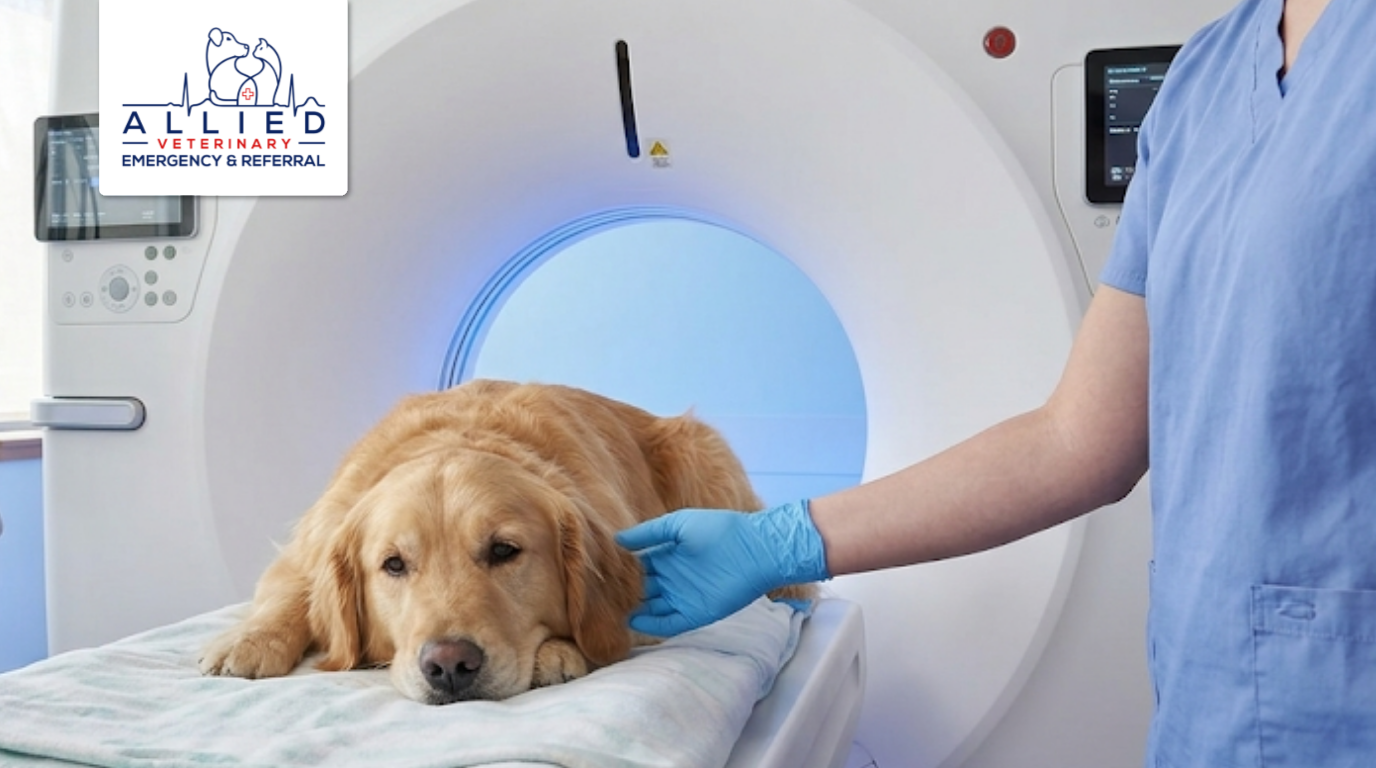
On the day of the scan, your pet will be evaluated by our nursing staff and doctors to ensure they are stable for the procedure. Most scans require a short period of light sedation to ensure the images are clear and free of movement. Once the scan is complete, the images are sent for specialist review. We provide a comprehensive report to both you and your regular veterinarian to guide the next steps in specialty care services.
Upgrade Your Pet’s Diagnostics and Access Advanced 3D Imaging
Accessing the best technology should not be a complicated process during a medical crisis. Allied Veterinary Emergency and Referral maintains an independent practice where medical integrity and patient outcomes are the top priorities. Our investment in 3D high-definition imaging reflects our commitment to providing the highest level of care for the pets in our community. We focus on giving you clear answers and professional support to make the best decisions for your companion’s health.
If your pet has a complex condition that requires deeper investigation, you can contact our specialty team to learn more about our imaging capabilities. Allied Veterinary Emergency and Referral is ready to provide the advanced diagnostics and expert interpretation your pet deserves to ensure a path toward recovery.
Frequently Asked Questions
How much does a 3D CT scan for a dog or cat cost?
The cost of a 3D CT scan varies based on your pet’s specific medical needs and the complexity of the case. Factors such as the requirement for sedation or the use of specialized contrast agents can influence the total.
Does my pet need to be sedated for a CT scan?
The 3D imaging process itself is very fast, typically taking between five and fifteen minutes. The total visit involves a thorough process of preparation, sedation, and recovery to ensure your pet is safe and comfortable.
What is the difference between an MRI and a CT scan for pets?
A CT scan excels at capturing detailed images of bone, blood vessels, and the lungs, whereas an MRI is typically better suited for imaging soft tissues like the brain and spinal cord.
How soon will I get the results of my pet’s CT scan?
In most specialized veterinary hospitals, a veterinary radiologist reviews the 3D images and provides a comprehensive diagnostic report to your primary veterinarian within 24 to 48 hours.