Key Takeaways
- Pet owners in Minneapolis can quickly find reliable 24/7 emergency veterinary care at Allied Veterinary’s Brooklyn Park location.
- Understanding the signs of a pet emergency and the difference between emergency and urgent care is crucial for timely action.
- Calling ahead to an emergency vet helps ensure efficient and prepared care upon arrival.
- Allied Veterinary offers comprehensive emergency services with a compassionate, invested approach.
Finding Reliable Care When Every Minute Counts
Medical emergencies rarely happen when it is convenient. Few things are as stressful as realizing your pet needs immediate help in the middle of the night or on a holiday. The panic of the moment is often compounded by not knowing where to turn. If you are currently searching for a 24-hour emergency vet near Minneapolis, knowing who to trust is the first step toward relief.
Allied Veterinary Emergency and Referral is open around the clock to ensure your companion receives expert care whenever it is needed. We are a locally owned practice invested in the well-being of our community. Preparation is the best defense against panic. Knowing the warning signs of a true emergency and understanding the intake process empowers you to act quickly when your pet’s health is on the line.
When Every Second Counts: Understanding Pet Emergencies
The feeling of helplessness during a pet emergency is something no owner wants to experience. Your pet is a family member, and their distress is your distress. Recognizing the urgency and acting decisively can make all the difference. As devoted pet parents, your intuition is powerful, but knowing the specific signs of a crisis empowers you to seek help without delay. This isn’t just about finding an open clinic; it’s about connecting with a team that is prepared for the most critical situations, day or night.
Recognizing Common Pet Emergency Signs
While any sudden, significant change in your pet’s behavior warrants a call to a veterinarian, certain symptoms demand immediate action. If you observe any of the following, it’s time to seek emergency veterinary care right away:
- Difficulty Breathing: This includes choking, gagging, shallow or rapid breathing, or blue-tinged gums.
- Severe Bleeding: Bleeding that doesn’t stop within five minutes or is pulsing from a wound.
- Collapse or Seizures: Sudden loss of consciousness, inability to stand, or uncontrolled muscle activity.
- Ingestion of Toxins: If you suspect your pet has eaten chocolate, xylitol, antifreeze, rodent poison, or unknown medications.
- Signs of Extreme Pain: Continuous whining or crying, reluctance to move, aggression when touched, or an abnormal posture.
- Repeated Vomiting or Diarrhea: Especially if it contains blood or is accompanied by lethargy.
- Significant Trauma: Being hit by a car, falling from a height, or being attacked by another animal, even if injuries aren’t visible.
- Inability to Urinate or Defecate: Straining without producing anything can indicate a life-threatening blockage.
What Defines a 24 Hour Emergency Vet in Minneapolis?
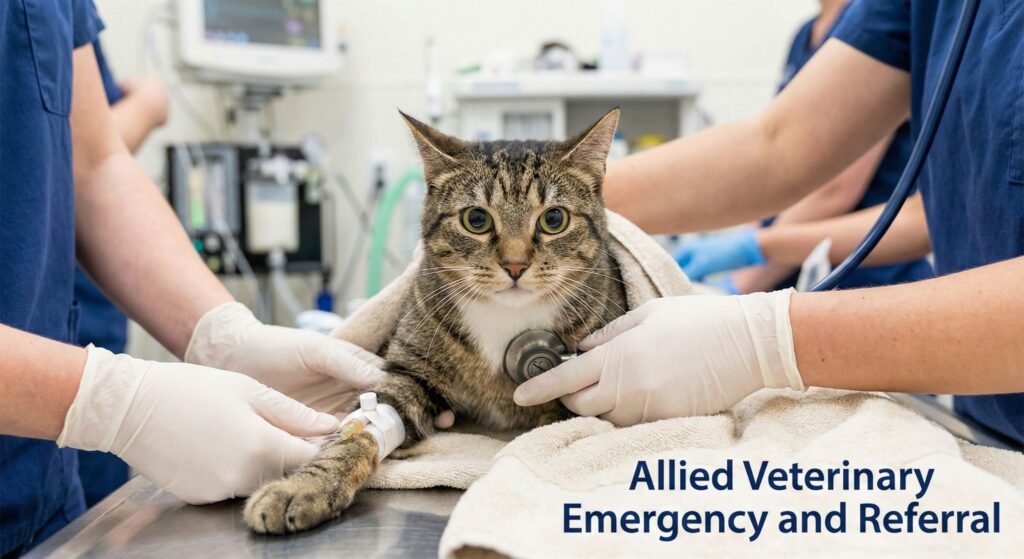
When searching for an “emergency vet open now Minneapolis,” it’s important to understand what sets a true 24-hour emergency hospital apart. Unlike a standard veterinary clinic with set daytime hours, an emergency facility is specifically designed and staffed for round-the-clock critical care. This means a veterinarian and skilled veterinary technicians are always on-site—not just on call.
A genuine 24-hour emergency vet in Minneapolis is equipped with specialized diagnostic and life-saving technology, including in-house laboratories for rapid bloodwork, digital radiography (X-rays), ultrasound, and fully-equipped surgical suites. This infrastructure allows the team to perform immediate assessments and interventions, which is crucial for treating conditions like pet poisoning, severe trauma, or sudden, critical illness. The core of these operations is providing life-sustaining emergency services at a moment’s notice.
Emergency vs. Urgent Care: Knowing the Difference for Your Pet
Understanding the distinction between emergency and urgent care can help you get the right help faster. Think of it like the difference between a human emergency room and an urgent care clinic.
- Emergency Care is for life-threatening conditions that require immediate, intensive intervention. The signs listed previously—such as difficulty breathing, major trauma, or seizures—fall squarely into this category.
- Urgent Care addresses conditions that are serious and require prompt attention but are not immediately life-threatening. Examples might include a persistent cough, a minor cut, a urinary tract infection, or an ear infection.
While both are time-sensitive, emergencies represent the highest priority. Allied Veterinary provides both, ensuring a clear pathway to the appropriate level of treatment. If you are facing a serious but less critical issue, our urgent care services provide the timely attention your pet needs without the intensity of an emergency room visit. If you’re ever unsure, it is always best to call.
Your Next Steps: What to Expect When Calling an Emergency Vet
Once you’ve identified an emergency, your first action should be to call the hospital. Calling ahead is a critical step that helps the veterinary team prepare for your arrival. When you contact our Brooklyn Park location, a team member will ask for your pet’s breed, age, weight, and the nature of the emergency. This allows us to prepare necessary equipment and personnel and provide you with any first-aid advice you can administer at home or on the way. This initial conversation is the first step in the triage process, helping us assess the severity of the situation before you even walk through the door.
Preparing for Your Visit: Essential Items and Tips
In the rush of an emergency, it can be hard to think clearly. Having a few things ready can streamline the process upon your arrival.
- Medical History: If possible, bring any relevant medical records or a list of your pet’s current medications and known allergies.
- Toxin Information: If your pet ingested something poisonous, bring the container or a photo of the label.
- Safe Transport: Transport your pet as safely and calmly as possible. Use a carrier for cats and small dogs. For larger dogs, a blanket can be used as a stretcher. Keep them warm and minimize movement to prevent further injury.
Providing these details upfront allows our specialized team to bypass administrative delays and focus immediately on assessing your pet’s condition and stabilizing them.
Why Minneapolis Pet Owners Choose Allied Veterinary Emergency and Referral
In a region with many options, pet owners consistently choose Allied Veterinary for a simple reason. We are invested. We are not a large or impersonal corporation. We are a locally owned practice founded on the principles of connection and medical excellence. Our promise is to care for your pet with the same dedication we would our own.
Understanding our philosophy means knowing that nothing we do is standard or typical. We treat the patient instead of just the condition. We support you with clear communication and empathy throughout the entire process. For those seeking an emergency animal hospital, our facility is fully staffed and equipped 24/7 to handle any crisis. We are proud to be a trusted partner for families by offering a human-centered approach when it matters most. Contact us immediately if your pet requires urgent attention.
FAQs
What signs indicate my pet needs a 24-hour emergency vet immediately?
Seek immediate 24-hour emergency veterinary care if your pet exhibits severe bleeding, difficulty breathing, seizures or collapse, ingestion of toxins, signs of extreme pain, or significant trauma like being hit by a car. These situations are often life-threatening and require urgent attention.
How is an emergency vet different from an urgent care clinic?
An emergency vet, like Allied Veterinary, provides 24/7 critical care for life-threatening conditions requiring immediate intervention and potential overnight hospitalization. Urgent care clinics address serious but non-life-threatening issues that need prompt attention but are not immediately critical.
What should I do before heading to a 24-hour emergency vet in Minneapolis?
First, call Allied Veterinary immediately to inform them of your pet’s situation and your estimated arrival time; they can offer guidance on initial first aid. Gather your pet’s medical records, a list of medications, and any samples related to the emergency (e.g., vomit, ingested toxins).
Will my pet be seen immediately upon arrival at an emergency vet?
Upon arrival at an emergency vet, your pet will undergo a rapid triage assessment by a veterinary professional to determine the urgency of their condition. Pets with the most life-threatening conditions are prioritized, similar to a human emergency room.
What diagnostic services are available at a 24-hour emergency animal hospital?
A 24-hour emergency animal hospital typically offers advanced diagnostic services such as bloodwork, X-rays (radiographs), and ultrasound imaging to quickly assess internal injuries, organ function, and detect foreign objects, enabling rapid and accurate treatment.