Key Takeaways
- Emergency vet clinics operate on a triage system, prioritizing pets based on the severity of their condition, similar to a human ER.
- The process typically involves initial assessment, stabilization, diagnostics, treatment planning, and potential hospitalization.
- Pet owners should be prepared with medical history and contact information, and calling ahead can help the clinic prepare for your arrival.
- Emergency clinics offer specialized 24/7 care for life-threatening situations, distinguishing them from regular veterinary or urgent care clinics.
- Allied Veterinary Emergency and Referral is committed to providing expert, empathetic care for your pet during stressful emergency situations.
When your pet is sick or injured, the world seems to stop. The fear and anxiety that come with a pet emergency are overwhelming, and the last thing you want to worry about is what to expect when you rush through the doors of an animal hospital. At Allied Veterinary Emergency and Referral, we understand. As a locally owned and operated team of veterinary professionals, we are invested in providing compassionate, expert care for your pet and clear, reassuring communication for you. This guide is designed to demystify the emergency vet visit process, so you feel more prepared and know that your beloved companion is in capable, caring hands.
When to Seek Emergency Veterinary Care
One of the most difficult decisions for a pet owner is determining if a situation requires immediate medical attention. While you know your pet best, certain signs are clear indicators that a trip to an emergency vet is necessary. Acting quickly can make all the difference in the outcome.
Key Signs Your Pet Needs Emergency Care
It is crucial to seek immediate veterinary care if you observe any of the following signs. For pet parents in communities like Brooklyn Park, Minneapolis, and Eden Prairie, knowing when to head straight to an emergency hospital like Allied Veterinary is the first step in getting your pet the help they need.
- Difficulty breathing: This includes choking, gasping, or shallow, rapid breaths.
- Severe bleeding: Any bleeding that doesn’t stop with pressure or is coming in spurts.
- Seizures or collapse: Uncontrolled shaking, loss of consciousness, or sudden inability to stand.
- Signs of extreme pain: Whining, shaking, hiding, or acting aggressively when touched.
- Repeated vomiting or diarrhea: Especially if it contains blood or is accompanied by lethargy.
- Ingestion of toxins: This includes antifreeze, rodent poison, chocolate, xylitol, or certain plants.
- Obvious trauma: Such as being hit by a car, falling from a height, or being in a fight with another animal, even if injuries aren’t visible.
- Struggling to urinate or defecate: Straining with no result can indicate a life-threatening blockage.
Emergency vs. Urgent Care: Knowing the Difference
It’s also important to understand the distinction between a true emergency and an urgent issue. True emergencies are imminently life-threatening situations that require the 24/7 critical care capabilities of a dedicated animal hospital. Our emergency services are designed for these critical moments.
Urgent conditions, while serious and in need of prompt attention, are not immediately life-threatening. Examples might include minor cuts, allergic reactions, or a persistent cough. For these situations, urgent care can be the most appropriate choice, bridging the gap between your primary veterinarian and the emergency room. Knowing the difference helps ensure your pet gets the right level of care.
Before You Arrive: Preparing for Your Emergency Vet Visit
In the rush of a pet emergency, a few moments of preparation can significantly streamline the process once you arrive at the clinic. Taking these steps can reduce stress and help our team begin treatment more efficiently.
What to Gather Before Leaving Home
In the rush of a medical crisis, a few moments of preparation can significantly streamline your pet’s treatment. We recommend calling us while you are on the way. This gives our team the time to prepare the treatment area specifically for your pet’s condition.
To help us diagnose your pet as fast as possible, try to gather a few essential items before leaving home. Grab any available medical records and vaccination history, along with a list of current medications and when they were last given. If the emergency involves an ingested object or suspected toxin, safely bring the packaging or a sample with you. It is also helpful to have your primary veterinarian’s contact information on hand. This data provides our team with a complete view of your pet’s health history, saving valuable minutes during the exam.
Upon Arrival: Triage and Initial Assessment
When you walk into an emergency animal hospital, the first step is not filling out paperwork but ensuring your pet is assessed immediately. This is the triage process, and it is a cornerstone of emergency medicine. It allows us to prioritize patients based on the severity of their condition. We want to reassure pet parents from Rochester, MN, to Eau Claire, WI, and all the communities we serve at our various locations that every pet is seen and assessed by a skilled professional upon arrival.
Understanding the Triage Process
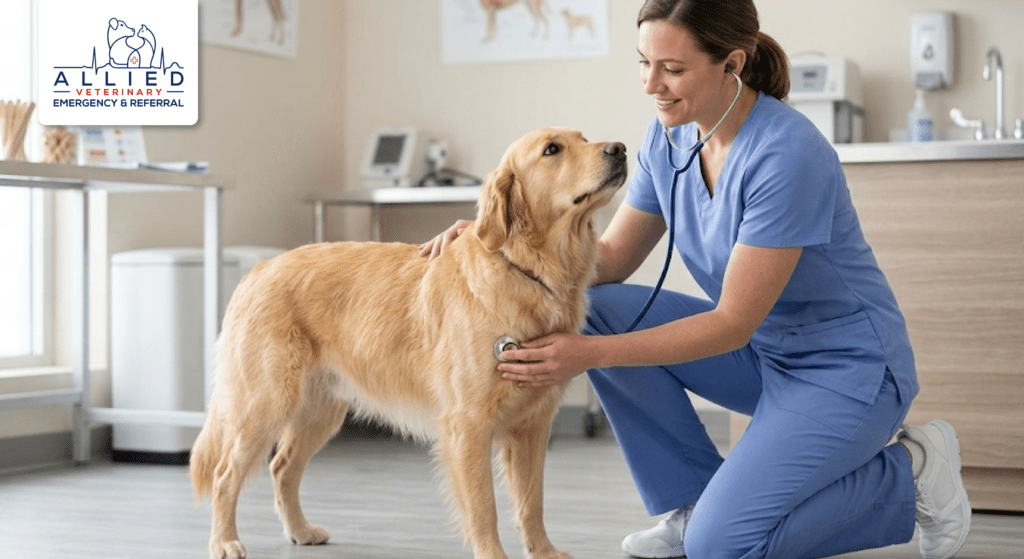
Triage is the method of sorting patients to ensure that those with the most critical, life-threatening injuries or illnesses receive immediate care. A veterinary technician or veterinarian will quickly evaluate your pet’s vital signs, including their heart rate, breathing, and level of consciousness. This initial evaluation determines their stability. While it can be stressful to wait, please know that if your pet is stable, it means another pet is in a more critical condition and requires the team’s immediate intervention. This system ensures that our medical resources are directed where they are most needed at any given moment.
Diagnostics, Stabilization, and Treatment Planning
After the initial triage, the next steps involve stabilizing your pet and performing diagnostics to understand the full scope of the medical issue. Our goal is to quickly gather the information needed to create an effective treatment plan, and we are committed to keeping you informed every step of the way. As a resource for pet parents, we believe clear communication is key to a trusted partnership.
Common Diagnostic Tests
Emergency situations often require rapid diagnostic work. Depending on your pet’s symptoms, we may recommend a variety of tests to get a clear picture of what is happening internally. Our advanced diagnostic imaging capabilities and in-house laboratory allow us to get results quickly. Common tests include:
- Bloodwork: To assess organ function, check for infection, and measure red and white blood cell counts.
- X-rays (Radiographs): To identify broken bones, foreign objects, or issues within the chest and abdomen.
- Ultrasound: To get a detailed, real-time view of abdominal organs like the liver, kidneys, and spleen.
Developing a Treatment Plan
Once we have a diagnosis, we will discuss our findings with you in detail. This conversation is a collaborative process. We will present you with the recommended treatment options, the prognosis for your pet, and a detailed estimate of the associated costs. We will answer all of your questions, ensuring you have the information you need to make the best decision for your pet and your family. Whether the plan involves medication, hospitalization, or emergency surgery, we will proceed with your full consent and understanding. We invite you to learn more about Allied and our collaborative approach to veterinary medicine.
Critical Care, Hospitalization, and Recovery
For severe medical conditions, admission to the hospital is often the safest path to recovery. This allows our team to provide the continuous, aggressive support that simply isn’t possible at home.
Life in the Veterinary ICU
Our Intensive Care Unit (ICU) is staffed 24/7 by specialized veterinarians and technicians. In this environment, your pet receives constant attention rather than intermittent checks. Treatment often involves oxygen therapy for respiratory support and intravenous (IV) fluids to deliver medications directly into the bloodstream.
We utilize advanced technology to continuously track vital signs—including heart rate, ECG, and blood pressure—while prioritizing pain management to ensure your pet remains as comfortable as possible. We understand that leaving your pet behind is stressful, so we commit to providing you with regular updates on their condition throughout their stay.
Allied Veterinary: Your Partner in Pet Emergencies
At Allied Veterinary Emergency and Referral, we are more than just a clinic; we are a dedicated partner in your pet’s health. As a locally owned, non-corporate practice, our decisions are driven by medical integrity rather than shareholder profits. We proudly serve pets and their families across Minneapolis, Eden Prairie, Rochester, MN, and Eau Claire, WI, providing high-quality individualized care at accessible prices.
In a moment of crisis, you can trust that we are deeply invested in your pet’s recovery and your peace of mind. We are here for you 24 hours a day, 7 days a week. If you believe your pet is experiencing an emergency, contact Allied Veterinary immediately.
FAQs
What is the first thing an emergency vet clinic does when my pet arrives?
Upon arrival at an emergency vet clinic, your pet will undergo an immediate triage assessment by a veterinary professional to determine the urgency of their condition and prioritize care based on medical need.
How do emergency vets prioritize cases if multiple pets need care?
Emergency vets use a systematic triage process to prioritize patients, similar to a human ER. Pets with the most life-threatening conditions, such as severe trauma or respiratory distress, receive immediate attention over those with less critical issues.
What types of diagnostic tests are commonly performed in a pet emergency?
Common diagnostic tests include bloodwork (CBC and chemistry panels), X-rays, and ultrasound imaging to assess organ function, detect internal injuries, or identify foreign objects.
How is critical care different at an emergency vet compared to a regular vet?
Emergency vets, particularly those with an Intensive Care Unit (ICU), offer specialized 24/7 monitoring, advanced life-saving interventions like oxygen therapy, IV fluid support, and immediate diagnostic capabilities, which typically extend beyond the scope of a regular veterinary clinic.
What should I bring with me when taking my pet to an emergency vet?
It is helpful to bring your pet’s medical records, a list of current medications, any known allergies, and contact information for your regular veterinarian. Calling ahead can also help the emergency team prepare for your arrival.