Key Takeaways
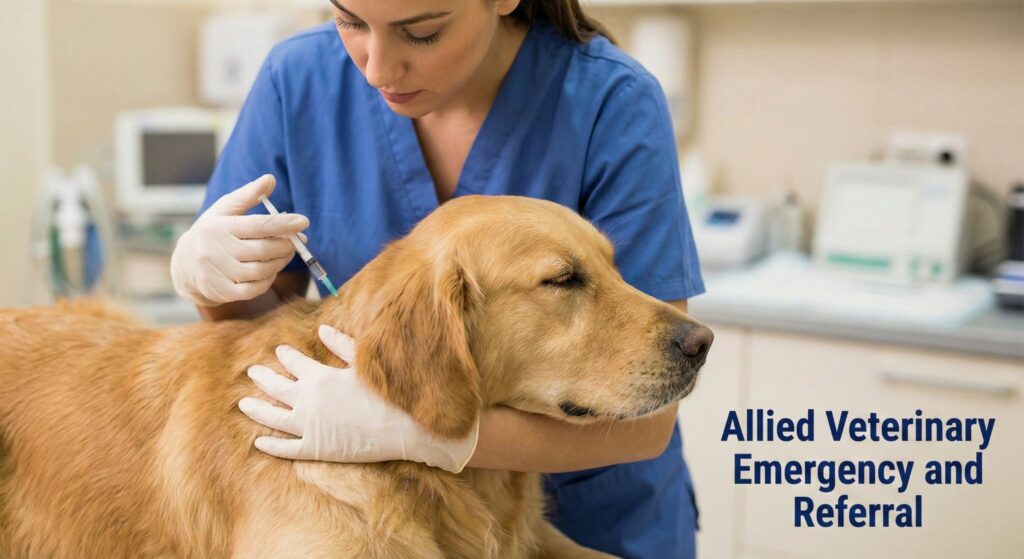
- Veterinary referrals ensure your pet receives the highest level of specialized care for complex or chronic conditions.
- Specialty hospitals offer advanced diagnostics, cutting-edge treatments, and board-certified expertise beyond general practice capabilities.
- The referral process is a collaborative effort between your primary veterinarian and the specialty team, ensuring seamless care and communication.
- Allied Veterinary Emergency and Referral provides compassionate, expert specialty care in locations like Brooklyn Park, supporting pet owners and referring veterinarians.
- Understanding the value of referral-based medicine builds trust and confidence in your pet’s healthcare journey.
What a Referral Means for Your Pet’s Health
Hearing your trusted family veterinarian say they are referring your beloved pet to another doctor can be unsettling. It’s natural to feel a moment of concern. However, a referral to a specialty hospital is not a sign of giving up; it’s a proactive step toward providing your pet with the most advanced and focused medical care available. Think of it as an extension of the excellent care your primary vet already provides. It’s a partnership designed to achieve the best possible outcome for your pet’s complex or chronic health issue. By recommending a specialist, your veterinarian is demonstrating their commitment to your pet’s well-being, ensuring they have access to a deeper level of expertise. This decision is rooted in the desire to explore every available option, tapping into the extensive resources that our specialty care services offer.
Common Reasons Your Vet Recommends a Specialist
A primary care veterinarian is a highly skilled general practitioner, much like a human family doctor. They manage a wide array of health concerns, from routine wellness checks to common illnesses and injuries. However, just as a human doctor would refer a patient to a cardiologist for a complex heart condition, a veterinarian will recommend a specialist when a pet’s condition requires a level of knowledge or equipment that falls outside the scope of general practice. This can include situations where a diagnosis is elusive despite initial testing, when a known condition is not responding to standard treatments, or when a pet requires highly specialized surgical or medical intervention.
Conditions Requiring Advanced Diagnostics or Treatment
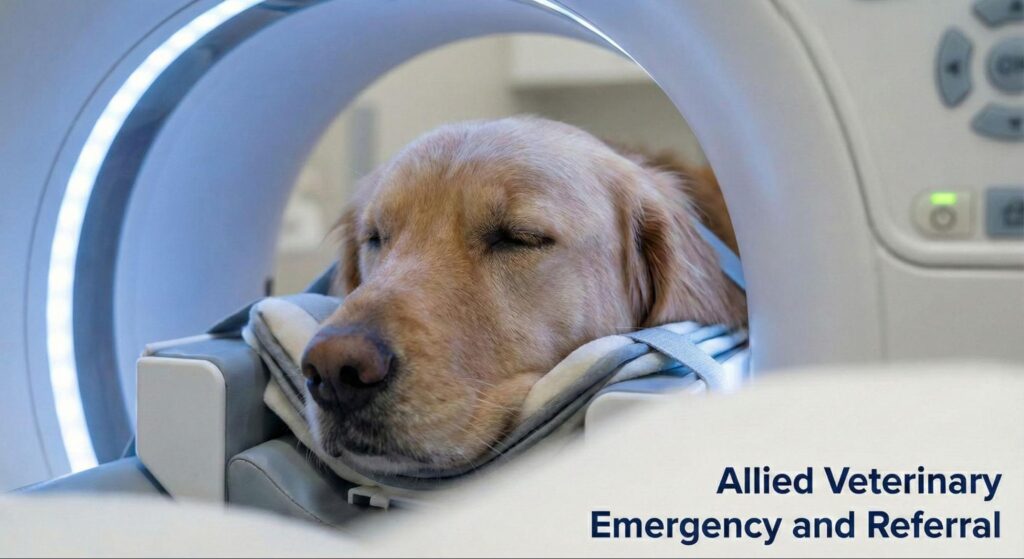
One of the primary reasons for a referral is the need for sophisticated diagnostic tools. While your family vet has access to standard X-rays and lab work, some conditions require a more detailed look. A specialty hospital is equipped with advanced technology that provides unparalleled insight into your pet’s health. For instance, if a pet is experiencing seizures, a neurologist may need an MRI to view the brain and spinal cord. For complex internal issues, an endoscope might be used to see inside the digestive tract without invasive surgery. At Allied Veterinary, our diagnostic imaging capabilities, including CT scans and advanced ultrasound, allow specialists to pinpoint the exact cause of an issue, leading to a more accurate diagnosis and effective treatment plan. Similarly, certain treatments like chemotherapy for cancer or advanced therapies for autoimmune diseases require the oversight of a specialist to manage safely and effectively.
When Specialized Surgery is Essential
Surgery is another area where a specialist’s expertise is often crucial. While general practitioners routinely perform procedures like spays, neuters, and minor mass removals, more complex operations demand the skill of a board-certified veterinary surgeon. These are professionals who have undergone years of additional, rigorous training in advanced surgical techniques. Scenarios that often require a referral to a surgical specialist include complicated orthopedic procedures like TPLO for knee ligament tears, delicate spinal surgeries to address nerve compression, or intricate soft tissue surgeries involving organs like the liver or lungs. Entrusting your pet to a specialist from our surgery department ensures they are in the hands of an expert with the specific experience and equipment needed to handle the most challenging cases.
Exploring Key Veterinary Specialties
The world of veterinary medicine includes a diverse range of specialties, each focusing on a specific area of a pet’s body or a particular type of disease. This depth of focus allows for a level of expertise that is critical for managing complicated health problems. Understanding these specialties can help you appreciate the comprehensive care your pet will receive.
Internal Medicine, Oncology, Cardiology, and Neurology
Four of the most common referral specialties are internal medicine, oncology, cardiology, and neurology. An internal medicine specialist tackles complex, often chronic diseases affecting a pet’s internal organs, such as kidney disease, hormonal imbalances, or severe gastrointestinal issues. When a pet is diagnosed with cancer, a veterinary oncology specialist develops and oversees treatment plans that may include chemotherapy, immunotherapy, or other advanced therapies. For pets with heart murmurs, congestive heart failure, or irregular heartbeats, a cardiology specialist uses tools like echocardiograms to diagnose and manage heart conditions. A neurologist focuses on the brain, spinal cord, and nervous system, treating conditions like epilepsy, intervertebral disc disease (IVDD), and brain tumors. Each of these fields represents a profound commitment to understanding and treating specific, often life-threatening, conditions.
The Collaborative Care Model: Primary Vet & Specialist Team
A referral does not mean you are leaving your primary veterinarian behind. On the contrary, it marks the beginning of a collaborative partnership. Your family vet remains the central point of contact for your pet’s overall health and is an integral part of the specialty care team. They provide the specialist with a comprehensive medical history, including past illnesses, medications, and personality traits, which is invaluable for the specialist’s assessment. Throughout the treatment process, the specialist communicates directly with your vet, providing updates on diagnostic findings, treatment plans, and progress. This ensures seamless continuity of care when your pet is ready to transition back for long-term management. At Allied, we believe this human-centered, team-based approach, powered by our dedicated team of board-certified specialists, leads to the best outcomes and provides peace of mind for pet owners.
What to Expect During the Referral Process
Navigating the referral process for the first time can feel overwhelming, but specialty hospitals are designed to make the experience as smooth as possible for both you and your pet. From the moment your veterinarian suggests a referral, a clear pathway is in place to ensure a seamless transition of care. We provide resources for pet parents to help them prepare for their visit and understand what to expect.
From Initial Discussion to Post-Appointment Follow-Up
The process begins with your primary veterinarian sending your pet’s complete medical records to the specialty hospital. Our team will then contact you to schedule an initial consultation. During this first appointment, the specialist will conduct a thorough examination, review all the records, and discuss your pet’s condition with you in detail. They will present diagnostic and treatment options, answer your questions, and work with you to create a plan that aligns with your goals and your pet’s needs. After the consultation and any subsequent procedures, the specialist will provide a comprehensive report to your primary vet. This open line of communication ensures that your family vet is always informed and ready to resume managing your pet’s ongoing care once the specialty treatment is complete.
When Emergency Referral Becomes Necessary
Sometimes, the need for a specialist is immediate and urgent. If a pet suffers from severe trauma, sudden critical illness, or a complication that requires 24/7 monitoring and intensive care, a referral to an emergency and specialty hospital becomes necessary. General practices are typically not equipped for overnight hospitalization or the level of constant observation required for critically ill patients. Our facility is prepared for these situations, offering both emergency services and urgent care. A referral in an emergency ensures your pet has immediate access to life-saving equipment, a team of emergency veterinarians and technicians, and on-call specialists who can intervene at a moment’s notice.
Allied Veterinary Emergency and Referral: Your Partner in Advanced Pet Care
At Allied Veterinary Emergency and Referral, we are invested in the health of your pet. We value the trust you place in us and our partnership with your family veterinarian. As a locally and privately owned hospital, our decisions are guided by our values and medical integrity rather than corporate protocols. We are committed to providing the highest quality of care at accessible pricing.
Our human-centered approach means we see you and your pet as individuals. We work to build a relationship based on clear communication and compassion for pet owners in Minneapolis, Eden Prairie, Rochester, MN, and Eau Claire, WI. Our Brooklyn Park location and other facilities stand as pillars of advanced collaborative veterinary medicine. Learning about Allied means understanding our deep commitment to the well-being of our patients and their families.
Taking the Next Step for Your Pet’s Health
If your veterinarian has recommended a referral, it is because they believe it is the best path forward for your pet’s health. Embracing this next step is a testament to your love and dedication as a pet owner. We encourage you to discuss any questions or concerns with our team. To learn more about our specialty care services or to begin the referral process at any of our hospitals, please contact us. We are here to be your partner in providing the advanced and compassionate care your pet deserves.
FAQs
Why would my regular veterinarian suggest a referral to a specialty hospital?
Your regular veterinarian refers your pet to a specialty hospital when their condition requires advanced diagnostic tools, specialized treatments, or the expertise of a board-certified veterinary specialist that may not be available in a general practice setting. It’s about ensuring your pet receives the highest level of care for complex or unusual health issues.
What kind of conditions do veterinary specialists treat?
Veterinary specialists treat a wide range of complex conditions, including advanced cancers (oncology), heart diseases (cardiology), neurological disorders like seizures or spinal issues (neurology), intricate surgical needs, and complicated internal organ diseases (internal medicine).
Will my primary veterinarian still be involved in my pet’s care after a referral?
Absolutely. Referral to a specialty hospital is a collaborative approach. Your primary veterinarian remains a crucial part of your pet’s healthcare team, sharing medical history with the specialist and often providing follow-up care and ongoing management after the specialty treatment.
What advanced diagnostics are available at a veterinary specialty hospital?
Specialty hospitals offer advanced diagnostic tools such as MRI and CT scans for detailed imaging, endoscopy for internal visualization, advanced laboratory testing, and specialized ultrasound to accurately diagnose complex conditions that require a deeper look than routine methods.
How does Allied Veterinary Emergency and Referral ensure collaborative care?
At Allied Veterinary, we are committed to transparent communication and partnership with your primary veterinarian. We ensure that your pet’s medical records and treatment plans are shared seamlessly, fostering a team approach to achieve the best possible outcomes for your pet and reinforce trust in their entire care team.