Eden Prairie Is Now Open 24/7

We’re excited to share that our Eden Prairie emergency hospital is now open 24/7 as of July 1st! This expansion means that 4 of our 5 Allied locations now provide around-the-clock care—every day of the year—to better support you, your clients, and your patients.
In addition to emergency services, Eden Prairie offers surgical consultations and a wide range of procedures, including orthopedic, soft tissue, and minimally invasive surgeries—all with the goal of making advanced care more convenient and accessible.
You can find us at:
8300 Flying Cloud Dr. Eden Prairie, MN 55344 | (952) 452-0025 | edenprairie@alliedervet.com
Brooklyn Park
View Details
Minneapolis
View Details
Eau Claire
View Details
Rochester
View Details
Eden Prairie
View Details
Rochester Update:
Growth on the Horizon
Rochester has been an enormously successful addition to our Allied family, and we’re so grateful for the warm welcome and ongoing support from the local veterinary community.
In appreciation, we hosted a town hall-style event last month to share updates on our growth and, more importantly, to listen to your feedback. Your insights are invaluable as we plan the next phase of development.
We’re excited to share that work has started on our standalone building in South Rochester. This expansion will allow us to move to a 24/7 schedule and bring on additional specialists—mirroring the comprehensive care already available at our Brooklyn Park and Eden Prairie locations.
We’ll keep you informed as plans progress, and as always, thank you for trusting us with your patients.
Unmatched Technology and Equipment

At Allied, we’ve invested in our patients and referring community by being the first referral center in the upper Midwest to purchase a cutting-edge 128-slice CT scanner, setting us apart from other clinics in the area that rely on older, lower-slice models. But what does this mean for your patient’s care?
- Faster
- Better image quality
- Safer
- Superior cardiac and neurological imaging
Bottom line: A 128-slice CT scanner is significantly faster and more precise. This means better image clarity, quicker diagnosis, and improved treatment outcomes.
Investing in Our Community

Gilbert’s Legacy
By now, many of you have heard about the memorial fund we established in honor of Gilbert, the beloved dog of Rep. Hortman and her family, who tragically lost their lives earlier this year. In the wake of this heartbreaking event, our Angel Fund has received an outpouring of support—raising over $18,000 to date.
Donations will be accepted through the end of July and will directly support the emergency and specialty care needs of local police service dogs, continuing Gilbert’s legacy in a way that protects and serves our community.
To contribute or learn more, visit: K9 Heroes Fund
We’re deeply grateful for the generosity of our community during such a difficult time.
Catch Us at the Maple Grove Days Parade!
On July 17th, our Brooklyn Park team will be joining the fun at the Maple Grove Days Parade! This year’s float theme is “The Dog-tor Is In 24/7!”—a playful nod to the 24/7 emergency care we’re proud to provide. Keep an eye out for our four-legged “Dog-tors” dressed in their best vet gear!
It’s a hometown favorite event and always a great time—we hope to see you there!
DVM Q&A: What do you recommend in the way of pain management upon presentation of the trauma patient?

Analgesia should be administered promptly in any patient presenting with a condition assessed to be painful—ideally after completing a neurologic exam.
Opioids are the preferred first-line agents due to their effectiveness and minimal impact on cardiovascular and respiratory function. Options include fentanyl, morphine, hydromorphone, methadone, and buprenorphine. These are best administered intravenously, with a continuous rate infusion (CRI) considered for ongoing pain control. Note: Butorphanol has limited and short-duration analgesic properties and may be less appropriate for moderate to severe pain.
Neuroleptanalgesia can be achieved with the addition of a benzodiazepine, enhancing both sedation and comfort.
NSAIDs are generally safe in patients who are hemodynamically stable and do not have underlying renal disease, GI concerns, or concurrent steroid use.
For multimodal analgesia, consider adjunct CRIs of:
- Ketamine (NMDA receptor antagonist)
- Alpha-2 agonists (e.g., dexmedetomidine)
- Lidocaine (especially effective in dogs)
Local/regional analgesia techniques (e.g., nerve blocks or epidurals) should also be considered when appropriate, offering targeted and effective pain relief with minimal systemic effects.
Tech Tip: Veterinary Technician Specialists
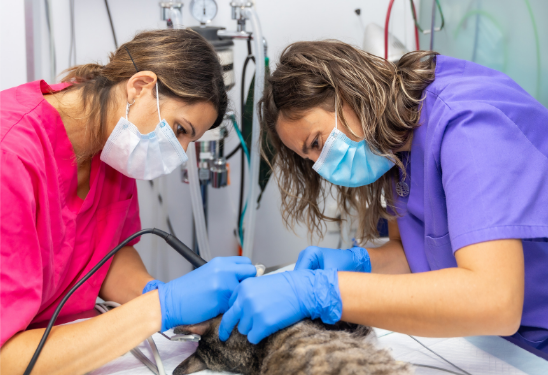
There are 16 officially recognized Veterinary Technician Specialist (VTS) academies by the National Association of Veterinary Technicians in America (NAVTA). These academies represent various specialties within veterinary technology, allowing credentialed technicians to focus their expertise.
Here’s a breakdown:
NAVTA Recognition: NAVTA recognizes 16 veterinary technician specialty (VTS) academies.
Advanced Training: Earning a VTS designation signifies advanced knowledge and skills in a chosen specialty and opens the door to many more career opportunities.
Academy Requirements: To become a VTS, technicians typically need to meet specific experience, case log, and examination requirements.