Key Takeaways
- Rapid response during a pet emergency is critical and can significantly impact your pet’s survival and recovery.
- Delaying veterinary care, even by minutes, can lead to severe complications, irreversible damage, and decreased chances of a positive outcome.
- Understanding common emergency signs and having a plan, including knowing the difference between urgent and emergency care, empowers pet owners to act decisively.
- Allied Veterinary Emergency and Referral offers compassionate, expert, 24/7 emergency services, ensuring pets in Minnesota and Western Wisconsin receive the immediate care they need.
The Critical Window: Why Every Minute Counts in Pet Emergencies
When a pet faces a medical crisis, the ticking clock becomes an unavoidable presence. Every second that passes can dramatically influence the outcome, turning a manageable situation into a critical one. As pet owners, our natural instinct is to protect our companions, and in an emergency, that means acting with purpose and speed. The time between the onset of a serious symptom and the moment your pet receives professional medical attention is a critical window where the chances for a positive recovery are highest.
Understanding the urgency isn’t about creating panic; it’s about empowering you to make decisive, life-saving choices. Many conditions that constitute an emergency can escalate rapidly without intervention. What might seem like a minor issue can quickly progress, leading to more complex and dangerous health problems. That’s why having a plan and knowing when to seek emergency services is a fundamental part of responsible pet ownership.
What Happens to Your Pet’s Body During a Medical Crisis
During a medical emergency, a pet’s body undergoes a cascade of physiological changes as it struggles to cope. For instance, in cases of major trauma or severe bleeding, the body will attempt to compensate by increasing heart rate and constricting blood vessels to maintain blood flow to vital organs. However, this state of shock cannot be sustained. Without immediate intervention to stop the bleeding and restore fluid volume, organs will begin to fail.
Similarly, if a pet ingests a toxic substance, time is of the essence to prevent its absorption into the bloodstream, where it can cause widespread organ damage. Respiratory distress is another critical emergency where every moment is vital. A lack of adequate oxygen can lead to irreversible brain damage and heart failure within minutes. Conditions like Gastric Dilatation-Volvulus (GDV), or bloat, are surgical emergencies where the stomach twists, cutting off the blood supply. Delaying treatment for even a short period can be fatal. Immediate veterinary care is essential to halt these damaging processes, stabilize the pet, and begin targeted treatment.
The “Golden Hour” in Veterinary Care: Understanding Critical Response Timing
In both human and veterinary emergency medicine, there is a concept known as the “golden hour.” This term refers to the crucial period immediately following a traumatic injury or the onset of a critical illness, where prompt medical treatment has the greatest chance of preventing death and improving the long-term outcome. While it’s not always a literal 60 minutes, the principle emphasizes that the sooner a patient is stabilized, the better their prognosis.
During this window, the body’s resources are depleted, and the risk of irreversible damage increases exponentially with each passing minute. For pets suffering from conditions like severe trauma, poisoning, or acute respiratory distress, the interventions performed during the golden hour are often the most impactful. This is why accessing 24/7 emergency vet care is not just a convenience, but a critical factor in your pet’s survival. The goal is to get the patient to a facility that can provide definitive care as swiftly as possible, allowing veterinary professionals to make the most of this precious time.
How Delays Can Escalate Pet Emergencies
The decision to “wait and see” can be one of the most dangerous choices a pet owner can make during a potential emergency. Animals often instinctively hide their pain, so by the time severe symptoms are obvious, the underlying condition may already be advanced. Delaying a trip to the emergency vet allows the medical crisis to escalate, often leading to a cascade of complications that are more difficult and costly to treat.
A wound that could have been simply cleaned and sutured might become severely infected. A mild case of dehydration from vomiting can progress to kidney injury. An untreated urinary blockage can lead to a ruptured bladder and life-threatening electrolyte imbalances. These complications not only cause unnecessary suffering for your pet but also drastically reduce the likelihood of a full recovery. Prompt action is the best way to prevent a manageable problem from becoming a tragedy. In some cases, waiting can require more advanced interventions, which is why having access to specialty care is also crucial.
Key Risks of Waiting
- Progression of Shock: Untreated shock leads to decreased blood flow to vital organs, causing cascading organ failure.
- Toxin Absorption: The longer a toxin remains in the system, the more it is absorbed, leading to more severe and widespread damage.
- Worsening of Internal Injuries: Internal bleeding or organ damage can worsen significantly without surgical intervention.
- Increased Pain and Suffering: Delaying care prolongs your pet’s pain and distress, which can also negatively impact their physiological state.
- Higher Risk of Infection: Open wounds or internal issues can develop severe, systemic infections if not treated promptly.
Recognizing Life-Threatening Pet Emergencies
Knowing how to identify a true emergency is the first step in a rapid response. Because pets cannot verbally communicate pain, their physical symptoms provide the only clear signals that they need immediate help. We encourage you to trust your instincts. If you feel something is seriously wrong, err on the side of caution. Waiting to see if symptoms improve is often a gamble with your pet’s life.
Being observant allows you to act as your pet’s most important advocate during a crisis. At Allied, we view ourselves as partners in that advocacy. You can learn more about Allied and our specific commitment to patient care to understand who will be looking after your companion.
Common Situations Demanding Immediate Veterinary Care
Certain physical signs are non-negotiable red flags. Respiratory distress requires instant attention. This includes symptoms like gasping, choking, shallow breaths, or blueish gums. You must also act immediately for severe bleeding that does not stop with pressure. Sudden collapse or unconsciousness are also critical warning signs that need professional intervention.
Neurological and trauma-based issues are equally urgent. Seek help for seizures that last more than a few minutes or occur in clusters. Likewise, major trauma requires an exam even if no external injuries are visible. This includes high-impact events like being hit by a car or falling from a height.
Finally, be vigilant regarding internal health. The inability to urinate is a life-threatening emergency indicating a blockage. Severe vomiting or diarrhea, especially with blood, warrants a visit. The same applies to the known ingestion of toxic substances like chocolate, xylitol, or human medications.
The Allied Veterinary Difference: Rapid Emergency Response and Stabilization
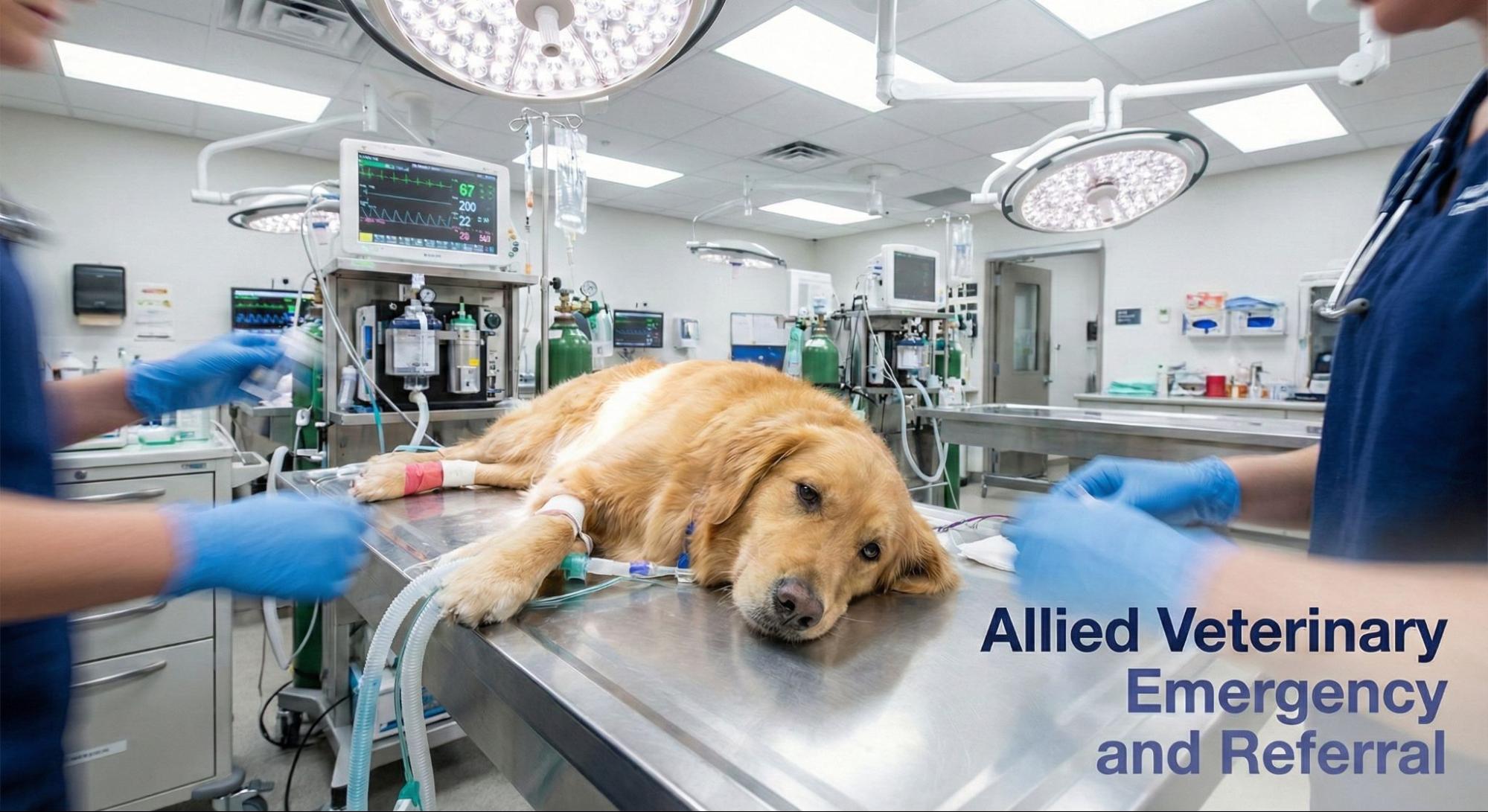
At Allied Veterinary Emergency and Referral, we are invested in providing the immediate, expert care your pet needs during a crisis. The moment you arrive, our highly trained team begins a process called triage to rapidly assess your pet’s condition and prioritize the most life-threatening issues. This ensures that critical patients receive attention immediately. Our initial stabilization efforts are designed to counteract the life-threatening effects of an emergency.
This often includes administering IV fluids to combat shock, providing oxygen therapy for respiratory distress, and managing pain to keep your pet as comfortable as possible. We utilize advanced tools, including state-of-the-art diagnostic imaging, to quickly identify the root cause of the problem. This allows us to move from stabilization to targeted, effective treatment without delay.
Why Choose Allied Veterinary for Immediate Care
Our promise is “Invested Veterinary Care.” We are invested in our patients, our clients, and our community. As an independent hospital, our focus is solely on providing the best possible outcome for your pet. Our team provides compassionate, expert, and rapid care 24/7. We proudly serve pet owners throughout Minnesota and Western Wisconsin, with convenient locations including Brooklyn Park, Minneapolis, Eden Prairie, Rochester, MN, and Eau Claire, WI. When you are faced with a pet emergency, you can trust that our dedicated team is here for you and your beloved companion.
Emergency Care vs. Urgent Care: Knowing When and Where to Go
Understanding the distinction between emergency and urgent care can help you get the right level of care for your pet quickly. Emergency care is for severe, life-threatening conditions that require immediate, 24/7 intervention. These are the situations discussed above, such as major trauma, seizures, or difficulty breathing.
Urgent care, on the other hand, addresses conditions that are not immediately life-threatening but still require prompt attention—usually within 24 hours. Examples include minor wounds, ear infections, persistent coughing or sneezing, or mild vomiting or diarrhea without other serious symptoms. Allied Veterinary offers both services to ensure your pet gets the appropriate level of care. If you are ever in doubt, it is always safest to seek emergency care or call for guidance.
Get Immediate, Expert Care for Your Pet
In a pet emergency, there is no substitute for swift, decisive action. Your rapid response, combined with the expertise of a dedicated emergency veterinary team, gives your beloved companion the best possible chance for a long, healthy life. Do not hesitate when your pet’s health is at stake.
The compassionate professionals at Allied Veterinary Emergency and Referral are available 24 hours a day, 7 days a week, to provide the critical care your pet needs. We are invested in their well-being. If you are experiencing a pet emergency in Minnesota or Western Wisconsin, please contact us or come to one of our locations immediately.
FAQs
Why is immediate veterinary care so important during a pet emergency?
Immediate veterinary care is crucial because many pet emergencies can rapidly worsen without prompt intervention, leading to severe complications, irreversible damage, or even death. Acting quickly significantly increases your pet’s chances of survival and a better recovery.
What is the “golden hour” in veterinary emergencies?
The “golden hour” refers to the critical timeframe immediately following a traumatic injury or sudden severe illness in which prompt medical and surgical treatment has the highest likelihood of preventing death and improving outcomes. While not always a literal hour, it emphasizes the vital importance of rapid intervention.
What are some common pet emergencies that require immediate veterinary attention?
Common pet emergencies include severe bleeding, difficulty breathing, choking, ingestion of toxic substances, seizures, sudden collapse, paralysis, severe trauma (e.g., hit by car), severe vomiting or diarrhea, and inability to urinate or defecate.
How does Allied Veterinary Emergency and Referral stabilize pets during a crisis?
Upon arrival, our experienced team conducts an immediate triage to assess your pet’s condition and prioritize care. Stabilization often involves treatments such as IV fluids, oxygen therapy, pain management, and rapid diagnostics to address immediate life-threatening issues and prepare for comprehensive treatment.
What is the difference between pet emergency care and urgent care, and when should I choose each?
Emergency care is for life-threatening or critical conditions requiring immediate, 24/7 attention. Urgent care is for non-life-threatening illnesses or injuries that still require prompt attention but can wait for scheduled or extended-hour appointments. If unsure, always err on the side of caution and seek emergency veterinary advice.