Key Takeaways
- Recognizing the signs of a true pet emergency at night is crucial for prompt action.
- Immediate, calm actions at home can help stabilize your pet before professional veterinary care.
- Always call ahead to the emergency veterinary hospital to ensure they are prepared for your arrival.
- Knowing the difference between urgent care and emergency services ensures your pet receives the appropriate level of attention.
- Allied Veterinary Emergency and Referral offers compassionate, 24/7 emergency and specialty care across Minnesota and Western Wisconsin, including our Brooklyn Park location.
Recognizing a Nighttime Pet Emergency
The sudden realization that your pet is unwell in the middle of the night can be terrifying. When your regular veterinarian’s office is closed, it’s hard to know what constitutes a true crisis. Understanding the signs of a genuine emergency is the first step toward getting your pet the immediate care they need. Some situations, like severe trauma from an accident or a fall, are obvious emergencies. However, many critical symptoms can be more subtle, especially when you’re woken from sleep. Prioritizing your pet’s health means being able to identify these red flags, as swift action can make all the difference in the outcome. As a resource for pet parents, we want to empower you with the knowledge to act confidently.
Key emergency signs
Certain symptoms are always a sign that your pet needs immediate medical attention. If you observe any of the following, it’s time to seek emergency veterinary care:
- Difficulty Breathing: This is one of the most critical signs. Look for labored breathing, shallow panting, choking, or constant coughing. A dog that is panting heavily at rest is a cause for concern.
- Collapse or Severe Weakness: If your pet suddenly cannot stand, is stumbling, or seems disoriented, it requires immediate evaluation.
- Signs of Severe Pain: Pain in pets can manifest in various ways, from obvious whining and yelping to more subtle changes like restlessness, hiding, or uncharacteristic aggression. A hunched posture or a “prayer” position (front legs down, rear end up) can indicate severe abdominal pain.
- Neurological Symptoms: Seizures, especially if they last more than a few minutes or occur in clusters, are a serious emergency. Other signs include loss of balance, head tilting, or sudden blindness.
- Suspected Poisoning: If you know or suspect your pet has ingested a toxic substance, such as chocolate, xylitol, antifreeze, or certain plants, do not wait for symptoms to appear. The ASPCA Animal Poison Control Center is an excellent resource, but immediate veterinary care is paramount.
- Severe Vomiting or Diarrhea: A single episode might not be an emergency, but repeated, uncontrollable vomiting or diarrhea, especially with blood, can lead to dehydration and other serious issues.
- Uncontrolled Bleeding: Apply firm, direct pressure to the wound and head to the vet immediately.
- Inability to Urinate or Defecate: Straining to urinate with no success is a life-threatening emergency, particularly in male cats.
Immediate Actions: What to Do Before Heading to the Vet
Once you’ve identified an emergency, your actions in the next few minutes are crucial. The most important thing is to remain as calm as possible; your pet will pick up on your anxiety, which can worsen their stress. Your primary goals are to keep your pet safe, prevent further injury, and prepare for transport.
First, ensure the area is safe for you and your pet. An animal in pain or distress may bite or scratch out of fear. Approach them slowly and speak in a soothing voice. If you need to move your pet, do so carefully, supporting their body to minimize pain. For basic first aid, you can learn techniques from resources like the American Red Cross Pet First Aid guide, which covers essentials like wound care and CPR. For suspected poisoning, bring any packaging or information about the substance with you. Do not induce vomiting unless specifically instructed to do so by a veterinarian or a poison control expert.
Why calling ahead is crucial
Before you put your pet in the car, make one vital phone call: to the emergency veterinary hospital. This simple step is one of the most important things you can do. When you call ahead, you give the veterinary team a critical head start. You can provide details about your pet’s condition, their symptoms, and your estimated arrival time. This allows the staff to prepare the necessary equipment, medications, and personnel. They can reserve an examination room and have life-saving tools ready the moment you walk through the door. The team may also provide you with specific first-aid instructions to perform while you are en route, potentially stabilizing your pet and improving their prognosis. This one call can save precious minutes, which often make a life-or-death difference.
Preparing for Your Emergency Vet Visit
In the rush of a nighttime emergency, it’s easy to forget important items. Taking a moment to gather a few key things can significantly streamline the check-in and treatment process, allowing the veterinary team to help your pet faster.
First, if it’s safe to do so, confine your pet. A sturdy carrier is best for cats and small dogs, while a leash is essential for larger dogs. For injured pets, a makeshift stretcher can be made from a firm board or a blanket. Next, gather any relevant medical information. This includes your regular veterinarian’s contact details, a list of your pet’s current medications and known allergies, and any pertinent medical records you have on hand. Having this information ready prevents delays in treatment. Finally, remember to bring your wallet and phone. While it’s the last thing on your mind, veterinary care requires payment, and your phone is essential for communication. By preparing these items, you help the emergency team focus on what matters most: your pet.
Understanding Emergency vs. Urgent Pet Care
When your pet needs help after hours, you might hear the terms “emergency” and “urgent” care used. While they sound similar, they represent different levels of medical need. Understanding this distinction helps you seek the right level of care and manage your expectations.
Emergency services exist specifically for life-threatening situations that need immediate action. This includes the critical issues we just covered, like severe trauma, trouble breathing, sudden collapse, or active seizures. True emergency hospitals stay open 24 hours a day with specialized teams and advanced equipment. They are fully prepared to handle emergency surgeries, intensive care, and the most serious medical crises around the clock.
Urgent care, on the other hand, fills the gap between your primary veterinarian and the emergency room. It’s for conditions that need prompt attention but are not immediately life-threatening. Examples include minor wounds, ear infections, mild vomiting or diarrhea, or skin irritations. While these issues need to be addressed quickly, they don’t typically require the intensive resources of a full emergency hospital. Knowing the difference ensures that pets with the most critical needs are seen first in a triage situation.
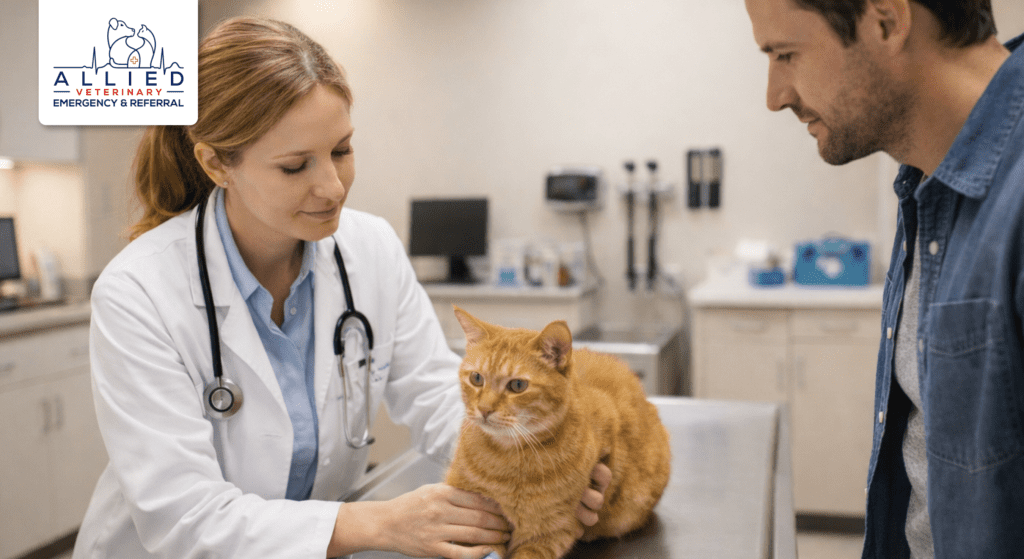
Allied Veterinary: Your Trusted Partner for 24/7 Pet Emergencies
When your pet faces a sudden medical crisis, you need a veterinary team that acts fast and communicates clearly. Allied Veterinary Emergency and Referral is an independent, locally owned practice serving our community. We base our approach on “Invested Veterinary Care.” This means our doctors focus on delivering top-tier emergency medicine while maintaining straightforward, honest communication with you at all times. We know exactly how overwhelming these situations feel, so we make sure you understand every single step of your pet’s treatment plan. You can read more about our team and discover exactly how we handle critical care.
We keep our hospital doors open day and night, including weekends and holidays, ready to handle any pet emergency. We actively serve pet owners across Minnesota and Western Wisconsin, operating fully staffed emergency hospitals in Minneapolis, Eden Prairie, Rochester, and Eau Claire. Our experienced doctors and technicians are always standing by to provide the immediate, high-quality emergency care your pet requires. We work hard to deliver this level of critical medical attention at a competitive price so you never have to hesitate when your pet needs us most.
Our Brooklyn Park Location: An Overnight Emergency Resource
For pet owners living in the northern metro, our Brooklyn Park location serves specifically as a dedicated overnight emergency center. This specialized facility is fully equipped to handle severe nighttime traumas, sudden illnesses, and critical care situations. Our doctors and technicians remain on-site all night, every single night, ensuring your pet receives immediate medical attention. When your primary daytime vet is closed, you do not have to wait until morning for help. Contact our team for immediate help with an overnight pet emergency.
Frequently Asked Questions
What constitutes a true pet emergency that can’t wait until morning?
A true pet emergency often involves symptoms like severe difficulty breathing, uncontrolled bleeding, collapse, prolonged seizures, suspected poisoning, inability to urinate, or signs of extreme pain. These situations require immediate veterinary attention, even at night.
Should I call the emergency vet before I arrive with my pet?
Yes, always call ahead. This allows the emergency veterinary team to prepare for your arrival, gather necessary equipment, and provide crucial first-aid advice while you are en route, potentially saving valuable time.
What should I bring with me to a nighttime emergency vet visit?
If possible, bring your pet’s medical records, a list of current medications and allergies, and your regular vet’s contact information. A secure carrier or leash and your preferred payment method are also advisable.
How do emergency vet visits differ from regular vet appointments or urgent care?
Emergency vet visits are for life-threatening or rapidly worsening conditions requiring immediate intervention, often operating 24/7 with a triage system. Urgent care addresses conditions that need prompt attention but are not immediately life-threatening, typically during extended hours but not always 24/7. Regular vet appointments are for routine, non-urgent care.
Does Allied Veterinary Emergency and Referral offer 24-hour emergency care in Minnesota and Western Wisconsin?
Yes, Allied Veterinary Emergency and Referral provides 24/7 emergency veterinary services at our facilities, including our Brooklyn Park location, serving pet owners throughout Minnesota and Western Wisconsin with compassionate and expert care.