Key Takeaways
- Critical pet emergencies require immediate, specialized veterinary intervention.
- Emergency vets employ a systematic process of triage, stabilization, advanced diagnostics, and intensive care to manage life-threatening conditions.
- Clear and empathetic communication with pet owners is a cornerstone of emergency veterinary care, providing reassurance during stressful times.
- Allied Veterinary Emergency & Referral provides 24/7 emergency and critical care across Minnesota and Western Wisconsin, including a state-of-the-art facility in Brooklyn Park.
- Understanding the emergency treatment process helps pet owners feel more confident and prepared to seek immediate help.
The moment your beloved pet faces a sudden, severe health crisis is one of the most frightening experiences a pet owner can endure. In these high-stakes situations, the world narrows to a single focus: getting them the best possible care, fast. At Allied Veterinary Emergency & Referral, we are invested in being your calm, confident, and compassionate partner through these critical moments. Understanding how vets handle critical pet emergencies can empower you to act decisively and provide peace of mind, knowing a dedicated team is ready to provide life-saving emergency services the moment you arrive.
From the initial assessment to advanced treatment, the emergency veterinary process is a highly organized, systematic approach designed to achieve one primary goal: stabilizing your pet and creating the best possible outcome. This guide walks you through each step of that journey, so you know exactly what to expect when your pet needs it most.
What Qualifies as a Critical Pet Emergency?
Distinguishing between a rough night and a life-threatening situation is the hardest challenge a pet owner faces. Urgent care handles serious but non-fatal issues like minor lacerations or ear infections. A critical emergency is different. It is a physiological event where a major body system is failing.
In these moments, the difference between recovery and loss often comes down to the speed of intervention. Understanding this distinction ensures you know when to bypass standard care. You must head straight to a facility equipped for high-stakes emergency services. If the condition involves respiratory distress, cardiovascular collapse, or severe trauma, the situation has escalated beyond simple urgency. It requires the resources of a 24-hour hospital.
Recognizing Key Signs
Trust your instincts. You know your pet better than anyone, and any sudden, dramatic shift in their behavior or physical state could signal a crisis. Be on the lookout for these specific, high-alert symptoms that demand immediate professional help:
- Severe Difficulty Breathing: This can include gasping, choking, shallow or rapid breaths, or noisy breathing.
- Collapse or Loss of Consciousness: If your pet is unable to stand, is suddenly weak, or becomes unresponsive.
- Seizures: Uncontrolled shaking, muscle twitching, or convulsions, especially if it’s the first time or they occur in clusters.
- Severe Bleeding: Bleeding that doesn’t stop with direct pressure or is coming from the nose, mouth, or rectum.
- Suspected Poisoning: Ingestion of known toxins like chocolate, rodenticides, antifreeze, or human medications.
- Major Trauma: Being hit by a car, falling from a height, or sustaining deep wounds or broken bones.
- Inability to Urinate: Straining to urinate with no success can indicate a life-threatening blockage.
- Severe Vomiting or Diarrhea: Especially if it contains blood or is accompanied by collapse.
Immediate Assessment: Triage for Critical Pets
When you arrive at an emergency hospital, the first step is triage. This isn’t about waiting your turn; it’s a rapid, methodical assessment to identify the most life-threatening conditions in the hospital at that moment. The veterinary team’s goal is to ensure that pets in the most critical condition receive immediate attention. While it may feel stressful to wait, the triage system ensures that medical care is prioritized based on the severity of each patient’s needs.
The Veterinary Triage Process
A veterinary technician or veterinarian will quickly assess your pet’s core vital signs. This initial evaluation includes checking their breathing, heart rate, gum color (an indicator of circulation), and level of consciousness. They will also gather a brief but essential history from you about what happened and what symptoms you’ve observed. This information allows the team to rank the urgency of your pet’s condition. A pet’s status can change, and the team will continue to monitor them even while they are waiting for the next step.
Life-Saving Stabilization Measures
For pets identified as critical during triage, the immediate focus shifts to stabilization. This phase is about preventing the pet’s condition from worsening and supporting their vital functions so a complete diagnosis can be made. It’s the foundational step in managing life-threatening pet emergencies. The primary goal is to pull the patient back from the brink, creating a window of opportunity for more comprehensive treatment.
Essential First Steps in Emergency Stabilization
Stabilization often involves simultaneous actions by the medical team. Oxygen therapy is usually the first step for any pet struggling to breathe. This is followed closely by placing an IV catheter. This provides a direct line to deliver fluids for shock and administer life-saving medications. Pain management is also started immediately to reduce physiological stress. Pressure wraps may be applied to stop any active bleeding.
Advanced Diagnostics for Rapid Intervention
Once your pet is more stable, the team must quickly determine the underlying cause of the crisis. We utilize diagnostic imaging and laboratory tools to look inside the body without invasive surgery. The emergency veterinary treatment process relies on using sophisticated tools to get accurate answers fast, as these results will guide the entire treatment plan. This phase is a focused investigation to uncover the full extent of your pet’s illness or injury.
Key Diagnostic Tests
Emergency veterinarians have a range of powerful tools at their disposal. Digital radiographs or X-rays can reveal heart enlargement, broken bones, or foreign objects in the stomach. Simultaneously, ultrasound provides a real-time look at soft tissue organs like the spleen and liver. This helps us detect internal bleeding or tumors. We also run comprehensive blood panels to assess organ function. This checks for infection and measures electrolyte levels to give us a complete picture of your pet’s internal health.
Comprehensive Treatment and Intensive Care Unit (ICU) Monitoring
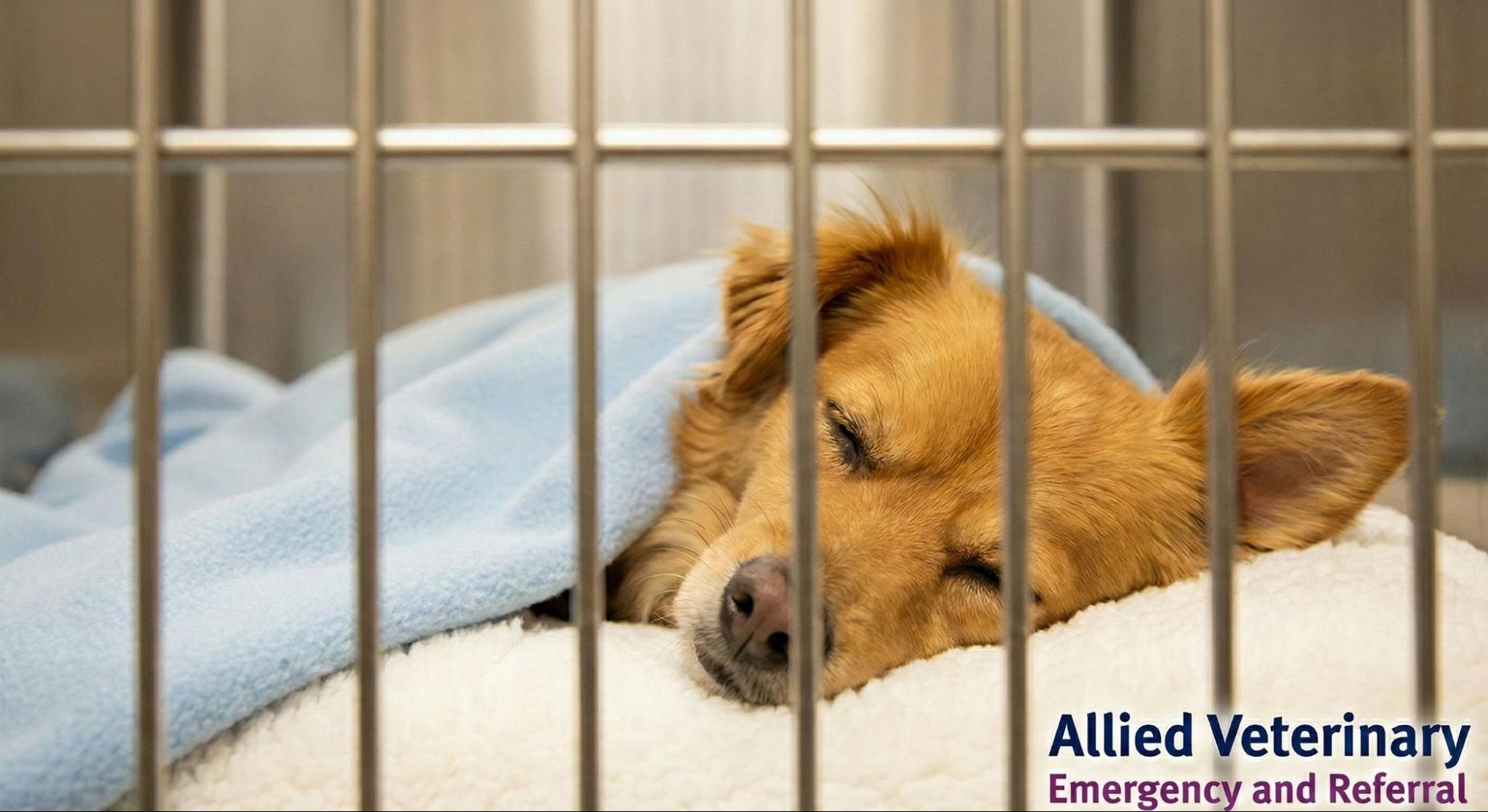
With a diagnosis in hand, a detailed treatment plan is developed. For pets who have suffered a critical emergency, this often involves admission into the veterinary Intensive Care Unit (ICU). The ICU is a specialized area of the hospital designed for round-the-clock monitoring and advanced support, providing the highest level of care for the most fragile patients. It is here that the journey toward recovery truly begins, overseen by a dedicated team.
Specialized ICU Care and Monitoring
Life in the ICU is defined by constant vigilance. This level of care includes:
- 24/7 Monitoring: Continuous observation of heart rate, ECG, breathing, blood pressure, and oxygen levels by our highly skilled team.
- Advanced Nursing Care: This can involve managing complex medication schedules, providing nutritional support (sometimes through feeding tubes), and maintaining patient cleanliness and comfort.
- Specialized Treatments: Pets in the ICU may require blood transfusions, continuous oxygen therapy, or advanced pain management techniques.
- Post-Surgical Care: For patients recovering from major emergency surgery, the ICU provides a safe and controlled environment for healing.
Compassionate Communication & Collaborative Team Care at Allied Veterinary
We know that behind every critical patient is a worried family. Excellent emergency medicine requires seamless collaboration, not just between doctors but with you. Our veterinary team operates on a model of shared decision-making and total transparency regarding prognosis and costs.
We serve pet owners across the region with hospitals located in Minneapolis, Eden Prairie, Rochester, and Eau Claire. We also serve nearby locations like our Brooklyn Park facility. Whether it is a late-night update or a discussion about discharge instructions, we are invested in keeping you connected to your pet’s journey.
Why Choose Allied Veterinary for Critical Pet Emergencies in Minnesota & Western Wisconsin
When a medical crisis strikes, you need a facility that combines advanced technology with compassionate vigilance. Allied Veterinary is fully equipped to handle the most complex trauma and medical cases around the clock.
In a moment of crisis, do not wait. We are ready to provide the highest level of intervention to give your pet the best possible chance at recovery. If you believe your pet is experiencing a critical emergency, please contact us immediately.
FAQs
What symptoms indicate a critical pet emergency requiring immediate vet attention?
Critical pet emergencies include severe bleeding, collapse, difficulty breathing, seizures, suspected poisoning, severe trauma (e.g., hit by car), uncontrollable vomiting or diarrhea, or inability to urinate/defecate. Any sudden, severe change in your pet’s health or behavior warrants immediate veterinary assessment.
How quickly will my pet be seen at an emergency veterinary hospital?
Upon arrival, your pet will undergo a rapid assessment called triage to determine the urgency of their condition. The sickest and most critically injured patients are prioritized to receive immediate life-saving care first, ensuring that those in the most danger are treated without delay.
What is the difference between emergency care and critical care for pets?
Emergency care addresses acute, urgent medical problems that require immediate intervention to stabilize a pet’s condition. Critical care (often provided in an ICU) involves ongoing, intensive, 24/7 monitoring and advanced treatment for life-threatening conditions or recovery from major surgeries after initial stabilization.
What types of diagnostic tests are performed during a pet emergency?
Emergency veterinarians utilize a range of diagnostics to quickly identify problems, including thorough physical examinations, blood tests (e.g., CBC, chemistry, electrolytes), X-rays, and ultrasounds. These tests help determine the cause and extent of the emergency to guide treatment decisions.
How will Allied Veterinary Emergency & Referral communicate with me during my pet’s critical emergency?
Allied Veterinary is committed to empathetic and transparent communication. Our team will provide timely updates on your pet’s condition, explain diagnostic findings, discuss treatment options and prognosis, and address any financial considerations, ensuring you are informed and supported throughout the process.