Key Takeaways
- Veterinary emergency rooms provide immediate stabilization and initial treatment for acute, life-threatening conditions.
- Critical Care Units (ICUs) offer continuous, intensive monitoring and advanced life support for pets requiring ongoing, specialized treatment.
- The primary difference lies in the duration and intensity of care: ER is for initial crises, while ICU is for sustained, complex medical management.
- Understanding these distinctions helps pet owners make informed decisions about their pet’s care pathway during critical times.
- Allied Veterinary Emergency and Referral offers seamless transitions between emergency and critical care, with specialized facilities in locations like Brooklyn Park, MN.
Why Understanding Veterinary Care Levels Matters When Every Moment Counts
When your beloved pet is suddenly ill or injured, the world can feel like it’s spinning out of control. In those stressful moments, your only focus is getting them the best possible help, fast. But the world of veterinary medicine has different levels of care, just like human healthcare. Two terms you might hear are “emergency room” and “critical care unit.” While they both address serious health crises, they serve distinct and complementary roles.
Understanding the difference between a pet emergency room and a critical care unit is more than just knowing vocabulary; it’s about being an empowered advocate for your pet. This knowledge helps you grasp the care pathway your companion might take, from initial crisis to ongoing recovery. It allows you to make clear, informed decisions with your veterinary team, ensuring your pet receives the precise level of attention they need, exactly when they need it. At its heart, knowing these distinctions provides peace of mind that your pet is on the best possible path to healing.
What is a Veterinary Emergency Room? Your Pet’s First Line of Defense
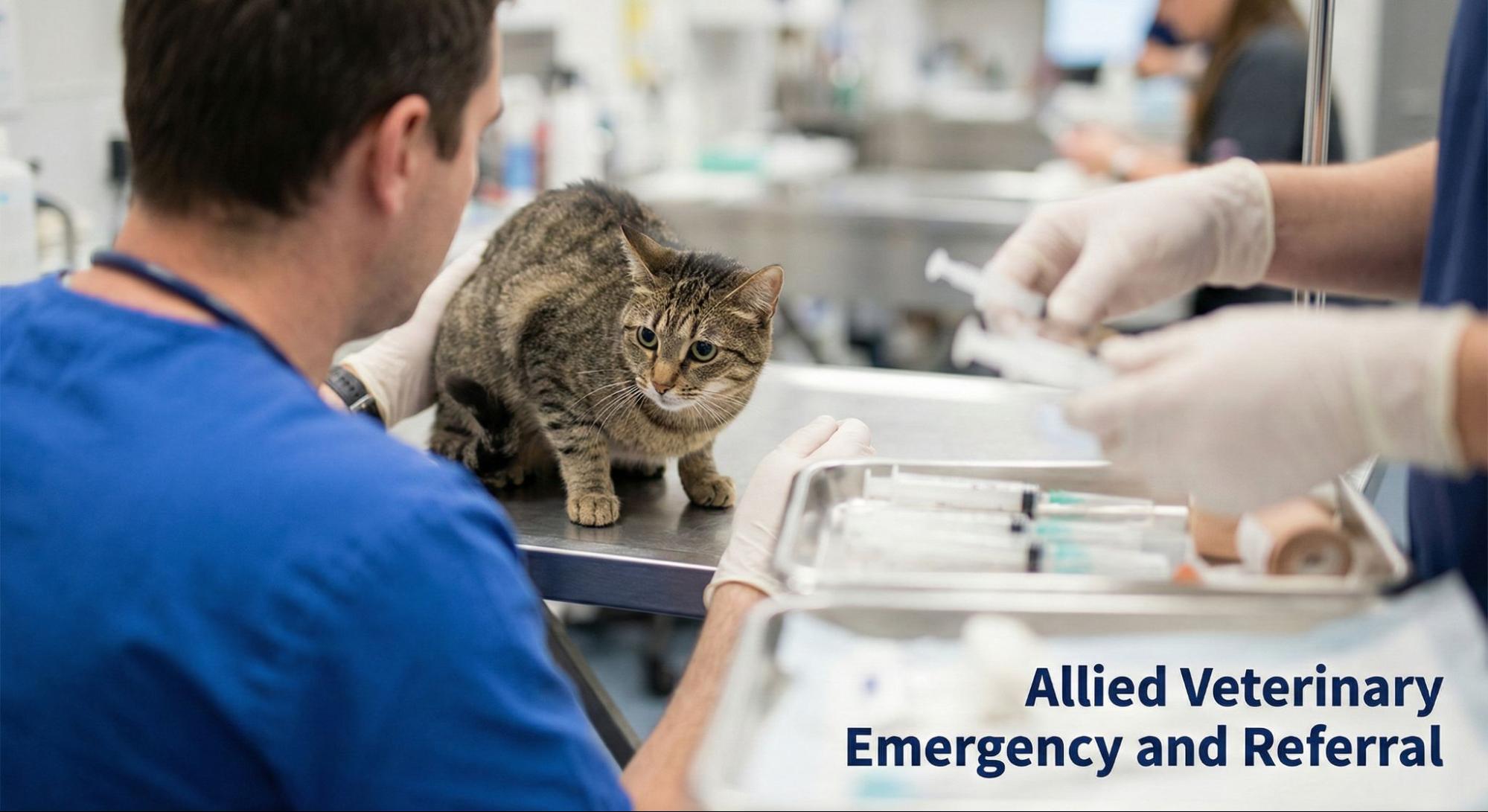
A veterinary emergency room (ER) is the first line of defense in a medical crisis. It is designed for one primary purpose: to provide immediate, life-saving intervention for acute conditions. Think of it as the animal equivalent of a human ER. When you rush your pet in, the team’s goal is to rapidly assess the situation through emergency triage, stabilize their condition, and diagnose the underlying problem.
The environment is fast-paced and equipped to handle a wide range of urgent situations. The services offered are focused on immediate impact, including pain management, wound care, and initial surgical interventions. The ER team utilizes advanced tools for rapid answers, making extensive use of in-house laboratories and diagnostic imaging, like X-rays and ultrasounds. Whether it’s a sudden illness or a traumatic injury, the ER is where the immediate battle for your pet’s life is fought and won. It’s the starting point for a journey that may involve other specialized services, but it all begins with stabilization.
Common Conditions Treated in a Pet Emergency Room
An emergency room visit is warranted for any condition that is severe, sudden, or potentially life-threatening. The goal is to address the immediate crisis and prevent the situation from worsening. Some of the most common reasons pet owners seek emergency services include:
- Trauma from accidents, such as being hit by a car or animal fights
- Toxin ingestion or poisoning
- Sudden and severe allergic reactions
- Difficulty breathing or choking
- Seizures or sudden collapse
- Severe vomiting or diarrhea
- Inability to urinate or defecate
- Serious wounds or profuse bleeding
In these situations, the ER team acts swiftly to provide the necessary treatments to stabilize the patient, preparing them for the next step in their care.
Understanding the Veterinary Critical Care Unit (ICU): Intensive, Continuous Care
While the ER handles the initial crisis, the veterinary Critical Care Unit (CCU)—also known as the Intensive Care Unit (ICU)—is designed for pets who require ongoing, intensive medical attention. This is where the sickest patients receive continuous, 24/7 monitoring and advanced life support. If the ER is the front line, the ICU is the high-tech command center for managing complex, sustained health battles.
An ICU is staffed by a highly trained team of veterinarians and technicians with specialized knowledge in critical care. The environment is meticulously controlled, and the equipment is state-of-the-art, often including mechanical ventilators, advanced cardiac monitors, and sophisticated systems for delivering intravenous fluids and medications. This is where pets who are too unstable to go home after ER treatment or who have undergone major surgery receive the highest level of care to support their recovery. It’s a place of vigilance, expertise, and profound dedication to managing the most fragile patients.
When Does a Pet Need ICU-Level Care?
A pet is moved to an ICU when their condition is so severe or complex that it requires constant supervision and advanced medical intervention that cannot be provided in a general veterinary setting. The need for this level of specialty care is determined by a veterinarian after the initial stabilization phase. Common scenarios that necessitate ICU-level care include:
- Severe trauma with multi-organ injury
- Acute kidney or liver failure
- Sepsis (a life-threatening response to infection)
- Complex complications following major surgery
- Severe pneumonia requiring oxygen therapy or ventilation
- Heart failure requires continuous monitoring and medication
- Critical neurological conditions, such as severe seizures
The focus in the ICU is on supporting organ function, managing pain, and providing a bridge to recovery for pets facing the most serious health challenges.
Key Differences: Pet Emergency Room vs. Critical Care Unit
The core difference between a pet emergency room and a critical care unit lies in the duration and intensity of care. They are two essential parts of a whole, designed to work together to provide a complete spectrum of care for critically ill animals.
Here’s a breakdown of the key distinctions:
- Immediacy vs. Duration: The ER focuses on immediate, short-term stabilization of acute crises. The ICU provides sustained, long-term monitoring and treatment for hours, days, or even weeks.
- Intensity of Monitoring: While ERs monitor vital signs closely, ICUs provide continuous, minute-by-minute monitoring with highly specialized equipment for the most unstable patients.
- Types of Conditions: The ER treats a broad range of emergencies, from broken bones to poisoning. The ICU manages complex, systemic diseases like organ failure, sepsis, and post-operative complications that require ongoing life support.
- Staffing Specialties: ER teams are experts in triage and rapid stabilization. ICU teams are specialists in the ongoing management of critically ill patients, a distinct field of veterinary medicine.
For pet owners across Minnesota and Western Wisconsin, including those in Minneapolis, Eden Prairie, Rochester, MN, and Eau Claire, WI, facilities like ours are equipped to offer both, ensuring your pet never has a gap in care.
Seamless Transitions: From Emergency to Ongoing Critical Care
One of the most crucial aspects of advanced veterinary care is the seamless transition of a patient from the emergency room to the critical care unit. After a pet is stabilized in the ER, the emergency veterinarian will determine if they require more intensive, ongoing monitoring. This decision is made in close consultation with the pet owner, with clear communication about the pet’s condition and the recommended care plan.
The hand-off process is meticulous. The ER team provides a comprehensive summary to the ICU team, detailing the initial diagnosis, treatments administered, and the patient’s response. This collaborative approach ensures continuity of care is never broken. The critical care specialists then take over, building upon the life-saving work initiated in the ER. This integrated system means that from the moment you walk through our doors, your pet is in a coordinated ecosystem of care designed to support them through every stage of their crisis. It’s a key part of our promise to our patients and the pet parents who trust us with their care.
Invested Care at Allied Veterinary: Your Partner in Pet Health
At Allied Veterinary Emergency and Referral, we embody our brand promise of “Invested Veterinary Care.” This means we are deeply committed to the well-being of our patients as well as our clients and community. We understand that a medical crisis is frightening. We partner with you to navigate it with compassion and expertise. Our facilities, including our Brooklyn Park location, are equipped to provide both comprehensive emergency services and advanced critical care. This ensures a seamless continuum of treatment under one roof.
Our independent and privately owned model allows us to focus entirely on personalized patient outcomes. We invest in state-of-the-art technology and in a collaborative team of dedicated professionals who are passionate about what they do. From the front desk to our most specialized veterinarians, we work together to provide the highest quality of medicine with a human-centered touch.
Allied Veterinary’s Brooklyn Park Location: Supporting Advanced ICU Services
Our Brooklyn Park hospital is a prime example of our commitment to advanced care. This facility is fully equipped with a sophisticated ICU designed to manage the most complex and critical cases. It serves the local community and surrounding areas by providing high-level continuous monitoring. These life-support services can make all the difference in a pet’s recovery. The dedicated team is ready 24/7 to provide the invested and expert care your pet deserves during their most vulnerable moments. If you believe your pet needs immediate assistance, please contact us right away.
FAQs
What is the main difference between a veterinary ER and an ICU?
A veterinary emergency room (ER) focuses on immediate stabilization and initial treatment for acute, life-threatening conditions, while a Critical Care Unit (ICU) provides continuous, intensive monitoring and advanced life support for pets requiring ongoing, specialized care over an extended period.
When should I take my pet to an emergency room instead of waiting for a regular vet appointment?
You should take your pet to an emergency room immediately for any sudden, severe, or life-threatening symptoms such as difficulty breathing, severe bleeding, collapses, seizures, poisoning, major trauma, or inability to urinate.
What kind of continuous monitoring is provided in a pet ICU?
In a pet ICU, continuous monitoring can include vital signs like heart rate, respiratory rate, blood pressure, oxygen saturation, and temperature, along with specialized monitoring of organ function, intravenous fluid therapy, and pain management.
How does Allied Veterinary ensure a smooth transition from emergency to critical care?
Allied Veterinary ensures seamless transitions through close collaboration between emergency veterinarians and critical care specialists, standardized communication protocols, and continuous patient hand-offs to maintain uninterrupted, high-quality care for your pet.
What types of conditions typically require ICU-level care for pets?
Conditions requiring ICU-level care often involve severe trauma, acute organ failure (kidney, liver), severe infections (sepsis), complex post-surgical complications, advanced neurological conditions, or diseases necessitating mechanical ventilation or continuous specialized treatments.