Key Takeaways
- Pet critical care provides the highest level of specialized medical support for pets facing severe, life-threatening conditions, often requiring continuous monitoring.
- It differs from emergency care by focusing on ongoing intensive treatment and stabilization, typically within a veterinary Intensive Care Unit (ICU).
- Conditions like major trauma, organ failure, severe poisoning, and critical post-surgical complications often necessitate critical care.
- A veterinary ICU offers advanced technology, 24/7 monitoring, and a multidisciplinary team of criticalists and trained staff.
- Allied Veterinary’s Brooklyn Park location provides comprehensive critical care, ensuring your pet receives compassionate, expert attention when it matters most.
Understanding Pet Critical Care: More Than Just an Emergency Visit
When your beloved pet faces a sudden, severe health crisis, the experience can be overwhelming. In these moments, understanding the different levels of veterinary care available is crucial. Pet critical care represents the highest level of medical support for animals with life-threatening conditions. It goes beyond a standard veterinary visit or even an emergency stabilization; it is a specialized field dedicated to the ongoing management of critically ill or injured pets that require continuous monitoring and advanced medical interventions.
Think of it as the equivalent of a human Intensive Care Unit (ICU). This level of care is necessary when a pet’s condition is unstable, complex, or rapidly changing, demanding constant supervision and immediate access to life-saving technology. For pet owners in Brooklyn Park and the greater Minneapolis area, knowing that this advanced support exists can provide immense reassurance during a stressful time. The primary goal of critical care is to stabilize the patient, manage pain, support organ function, and create the best possible environment for recovery from a severe health event. It’s an intensive, moment-to-moment process managed by a highly skilled team.
Critical Care vs. Emergency Care: Knowing the Difference
It is important to distinguish between emergency care and critical care. They represent two distinct yet connected phases of treatment for a pet in crisis. Emergency services act as the first line of defense. They are designed to handle the immediate threat. When your pet suffers from severe trauma or a sudden acute illness, the emergency team focuses entirely on stabilization.
Critical care is what comes next for the most severe cases. It involves the ongoing and intensive management of a pet’s condition after they have been stabilized by the emergency team. This care is provided in a specialized veterinary ICU. Not all emergencies will require critical care. However, many pets admitted through the ER with life-threatening problems will transfer to the ICU for continued support.
When to Seek Emergency vs. Urgent Care
Understanding the urgency of your pet’s symptoms can help you make swift and effective decisions. You must seek immediate emergency care for severe trauma, such as being hit by a car, falling from a height, or sustaining deep bite wounds. Respiratory distress, including difficulty breathing, choking, or constant coughing, also requires instant attention. Other strict red flags include uncontrolled bleeding, suspected poisoning, or neurological signs like sudden collapse and prolonged seizures.
Consider urgent care for issues that are serious but not immediately life-threatening. This includes persistent vomiting or diarrhea that lasts for more than 24 hours, provided the pet has not collapsed. Minor physical issues such as limping, small cuts, or mild allergic reactions like hives also fit this category. Ear infections or skin rashes that cause significant discomfort are also appropriate for urgent care. Promptly seeking the right level of care gives your pet the best chance at a positive outcome.
Conditions That Demand Pet ICU-Level Care
A transfer to the veterinary ICU is necessary when a pet’s condition requires constant supervision and advanced life support that cannot be provided in a general veterinary setting. The range of illnesses and injuries is broad, reflecting the complexity of cases managed by a critical care team.
Common conditions that require intensive care include:
- Major Trauma: Pets involved in car accidents or who have suffered severe bite wounds often have internal injuries, fractures, and significant pain that demand intensive management.
- Acute Organ Failure: Sudden failure of the kidneys, heart, or respiratory system requires immediate and continuous intervention to support vital functions.
- Severe Toxicities: Ingesting poisons like antifreeze, certain plants, or human medications can cause rapid organ damage, necessitating intensive detoxification and support.
- Uncontrolled Medical Conditions: Complicated cases of diabetic ketoacidosis, severe pancreatitis, or uncontrolled seizures often require ICU-level monitoring and treatment adjustments.
- Post-Surgical Complications: Some pets, especially after major surgery, may need critical care to manage pain, prevent infection, and monitor their recovery closely.
For pet owners in communities like Eden Prairie and Rochester, having access to a facility equipped to handle these complex cases is paramount when their pet faces a life-threatening situation.
Inside a Veterinary Intensive Care Unit (ICU): What to Expect
A veterinary ICU is a highly controlled environment designed to provide the most advanced medical care possible. It is equipped with sophisticated technology and staffed by a dedicated team 24/7. This ensures every patient receives constant attention. Pet owners can expect a space that integrates technology and compassionate nursing to support recovery.
The resources within a veterinary ICU are extensive. They include advanced monitoring equipment for tracking vital signs like heart rate, blood pressure, and oxygen saturation in real-time. Life support systems, such as oxygen therapy cages and ventilators for breathing assistance, are standard. Precise IV pumps for fluid and medication delivery are also used. This allows the team at Allied Veterinary’s Brooklyn Park critical care unit to provide tailored and immediate interventions.
Continuous Monitoring and Advanced Life Support
The core of ICU care is meticulous and round-the-clock observation. This goes far beyond intermittent checks. Vital signs are tracked constantly. This allows the team to detect subtle changes and respond immediately. We often use electrocardiograms or ECGs for heart rhythm, along with direct blood pressure monitoring.
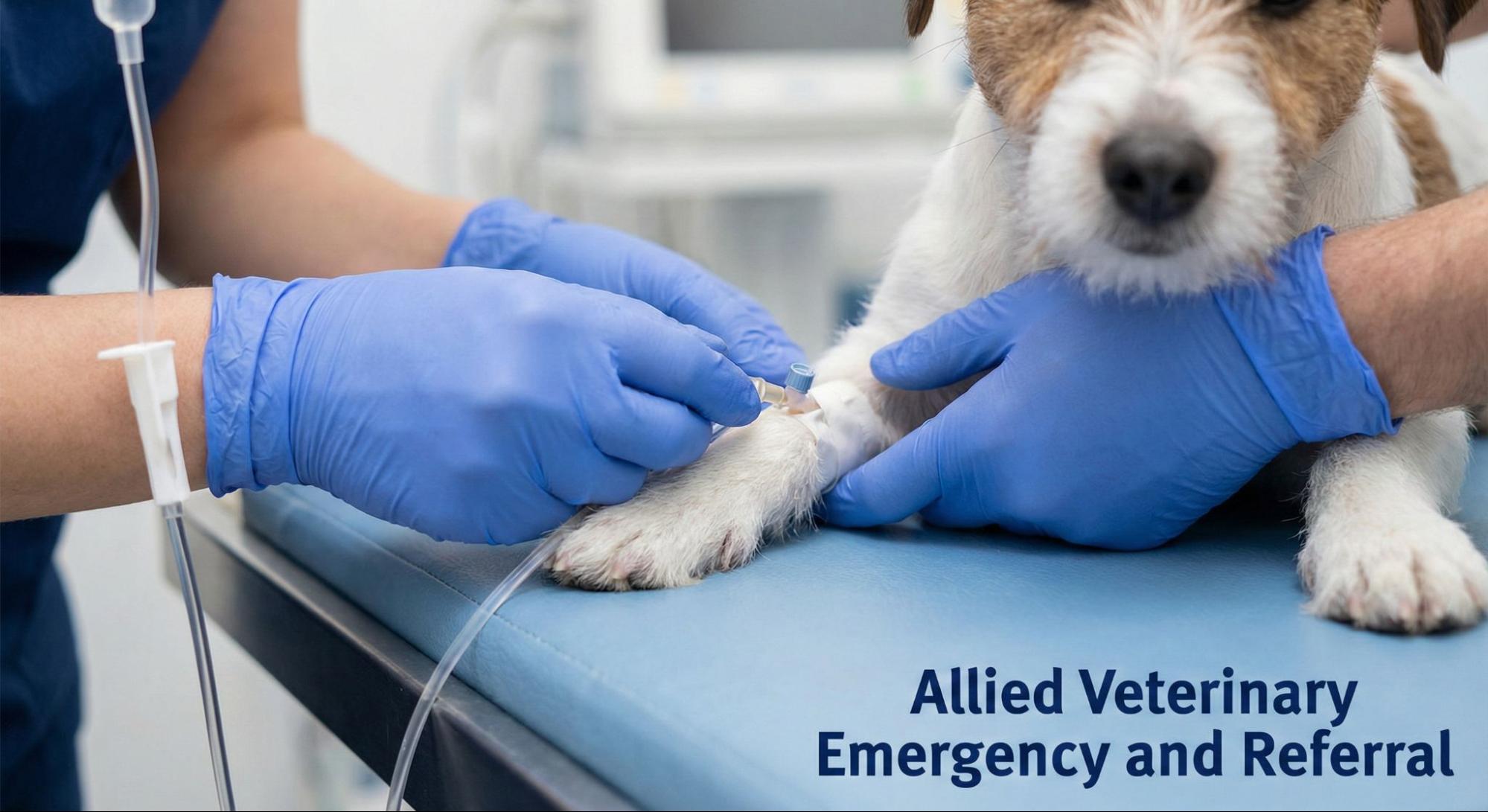
Advanced life support includes a range of specialized therapies. We utilize continuous rate infusions for consistent medication delivery alongside blood or plasma transfusions. Specialized nutritional support through feeding tubes is also available when needed. An ICU works closely with in-house labs and diagnostic imaging to get rapid results. This includes blood tests, X-rays, and ultrasounds. These tools enable swift and accurate treatment adjustments. Advanced pain management protocols are also a critical component to ensure pets are as comfortable as possible during their recovery.
The Allied Veterinary Critical Care Team: Invested in Every Recovery
The technology in an ICU is only as effective as the team operating it. Pet critical care is a collaborative, multidisciplinary field. At the helm are veterinary criticalists—board-certified specialists who have completed extensive, rigorous training in emergency and critical care medicine after veterinary school. They lead a team of highly skilled veterinary technicians and assistants who are specifically trained to care for the most fragile patients.
This team works in close partnership with other specialists, such as surgeons, cardiologists, and oncologists, to provide comprehensive care. If a pet needs specialized heart monitoring, our cardiology team may be consulted. For complex cancer-related crises, our oncology experts are available. This integrated approach ensures that every aspect of a pet’s health is addressed. For families in Minneapolis and extending to Eau Claire, WI, the Allied Veterinary team offers not just medical expertise but also a compassionate, human-centered approach, understanding the emotional toll of having a critically ill pet.
Why Choose Allied Veterinary for Pet Critical Care
When your pet needs intensive care, choosing the right facility is one of the most important decisions you will make. Allied Veterinary is a locally owned, non-corporate practice, meaning our focus is solely on providing the best possible care for our patients and their families. We are invested in every recovery. Our specialty care services are built on a foundation of expertise, compassion, and state-of-the-art technology.
Our Brooklyn Park location is fully equipped to provide ICU-level care, offering 24/7 availability for pets from across Minnesota and Western Wisconsin. Our experienced team is committed to a personalized approach, ensuring clear communication and support for pet owners during a difficult time. We combine the advanced capabilities of a large referral hospital with the heart and dedication of a private practice.
Seeking Immediate Veterinary Care: Your Pet’s Best Chance
In a critical situation, time is of the essence. If you believe your pet is experiencing a life-threatening emergency, do not hesitate. Seeking immediate veterinary attention is the most important step you can take to give them the best possible chance of recovery.
The emergency and critical care teams at Allied Veterinary are always prepared to help. We provide around-the-clock support to ensure that no matter when a crisis occurs, expert help is available. For immediate assistance or to learn more about our services, please contact us. Our teams at both our Minneapolis and Brooklyn Park locations are ready to provide the invested, compassionate care your pet deserves.
FAQs
What types of conditions typically require pet critical care?
Pet critical care is often needed for severe injuries like those from car accidents or deep wounds, acute organ failures (kidney, heart, respiratory), uncontrolled seizures, severe toxicities or poisonings, and complex post-surgical complications.
How does veterinary critical care differ from a standard emergency vet visit?
While an emergency vet addresses immediate, life-threatening issues to stabilize a pet, critical care involves ongoing, intensive management and continuous monitoring, often within a dedicated Intensive Care Unit (ICU), for severe and complex conditions that require long-term specialized attention.
What kind of monitoring and equipment is used in a veterinary ICU?
A veterinary ICU employs 24/7 continuous monitoring of vital signs like heart rate, blood pressure, and oxygen levels, along with advanced equipment such as oxygen therapy systems (ventilators, oxygen cages), IV fluid pumps, blood transfusion capabilities, and comprehensive in-house diagnostic tools.
Who provides care in a pet critical care unit?
Care in a pet critical care unit is delivered by a specialized team, typically led by board-certified veterinary criticalists. These specialists work alongside highly trained veterinary technicians and collaborate with other veterinary specialists to provide comprehensive, multidisciplinary care.
How can I know if my pet needs critical care?
If your pet exhibits severe symptoms such as extreme difficulty breathing, sudden collapse, persistent seizures, major trauma, or uncontrolled bleeding, it’s crucial to seek immediate veterinary attention. Your emergency veterinarian will determine if critical care is necessary based on your pet’s condition and stability.